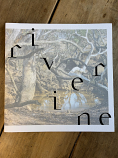
Riverine documents four autumns of collaborative work by artists Raymond Arnold, Ian Westacott and John Wolseley, camped along the Banyena/Richardson River at Bonnie Brae, a regeneratively managed farm in Victoria's Wimmera region; the book brings together more than 50 paintings, watercolours and etchings with essays by farm steward Prue McAllister and the three artists.
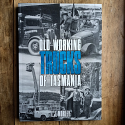
L.J. Morley's history of Tasmania's working trucks from 1909 to 1970 - from Mt Lyell mining trucks and Huon apple trucks to Hobart's fire engines and wartime army vehicles, with hundreds of photographs.
Rees Campbell, author of the bestselling Eat MORE Wild Tasmanian, turns her attention to Tasmania's off-shore islands. There are some 6,500 islands, islets, rocks and reefs around the state, and this book visits 40 of them — from the largest, Flinders Island, to the remote and uninhabited Pedra Branca and Mewstone in the Southern Ocean, to some of the smallest and closest, like the Harbour Islets in the state's far North West.
Our price:AUD 75.00
including GST
10.00
% (
AUD 6.82
)
Just Tassie Books
Browse thousands of Tasmanian books at The Book Cellar - convict history, local and family history, Aboriginal Tasmania, maritime, art, nature and fiction, new and out of print. Books ship from Campbell Town, Tasmania.
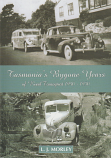
The second volume in Les Morley's series documenting Tasmanian road transport through rare historical photographs — covering the 1930s. Morley draws on a personal collection of photographs documenting trucks, buses, cars and road infrastructure from the period, presenting a pictorial record of how Tasmania moved through one of its most economically challenging decades.
Alison Alexander's accessible history of Tasmania's convict era — covering the transportation system, the convicts who came, the work they did, and how Van Diemen's Land transformed from a penal colony into a free society over the course of the 19th century.
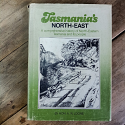
Written by Arthur William Loone (1857–1936), a Tasmanian Legislative Councillor for South Esk from 1910 who later died in Scottsdale, this book draws on first-hand knowledge of the district. It covers the discovery of gold and tin, the North-East's mines and railways, biographical details of the pioneers of its various districts, and honour rolls of the men who enlisted from North-East municipalities to serve overseas in the First World War.
![Islands of the Island State - Rees Campbell explores 40 of Tasmania's 6,500 offshore islands, their history & wild food | 2026 [NEW – SC]](https://onlinestore.bookcellar.com.au/images/T/islands-of-the-island-state-tTnn8f.png "Islands of the Island State - Rees Campbell explores 40 of Tasmania's 6,500 offshore islands, their history & wild food | 2026 [NEW – SC]")

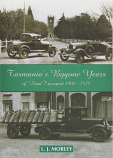
![Tasmania's Bygone Years of Road Transport 1930–1939 | L.J. Morley | 2013 [USED – SC – Very Good]](https://onlinestore.bookcellar.com.au/images/T/tas-bygone-years-1930-1939-y6I98N.png "Tasmania's Bygone Years of Road Transport 1930–1939 | L.J. Morley | 2013 [USED – SC – Very Good]")
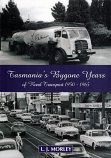
![Tasmania's Convicts – How Felons Built a Free Society | Alison Alexander | 2014 [NEW – SC]](https://onlinestore.bookcellar.com.au/images/T/tasmanias-convicts-how-felons-iXr3Xd.png "Tasmania's Convicts – How Felons Built a Free Society | Alison Alexander | 2014 [NEW – SC]")