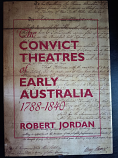
The first theatrical performance in Australia — a 1788 convict staging of George Farquhar's play The Recruiting Officer at Sydney Cove, to mark King George III's birthday — later inspired Thomas Keneally's novel The Playmaker and Timberlake Wertenbaker's play Our Country's Good. Robert Jordan, Foundation spent years combing British and colonial newspapers, court records and logbooks to uncover the real story of Australia's first forty years of theatre — organised not by nostalgic soldiers and settlers, as long believed, but by convicts themselves.

The biography of the Reverend George Eastman — a Church of England clergyman who served for 26 years in parishes across Van Diemen's Land during the final decades of the transportation era, and whose final posting was to Port Arthur. Eastman took an unfashionable view for his time: that convicts could be reformed, and that religious instruction, education and practical training were the means to achieve it.

The Cotton Papers presents the writings and drawings of William Jackson Cotton, compiled and introduced by Jane Cooper, with a prologue by historian Henry Reynolds and notes by historian Nick Clements. The material is presented as Tasmanian Aboriginal mythology and history handed down through five generations of the Cotton family, who settled on Tasmania's East Coast in the 1820s.
The Cotton Papers presents the writings and drawings of William Jackson Cotton, compiled and introduced by Jane Cooper, with a prologue by historian Henry Reynolds and notes by historian Nick Clements. The material is presented as Tasmanian Aboriginal mythology and history handed down through five generations of the Cotton family, who settled on Tasmania's East Coast in the 1820s.


Dr John Cobley (1914–89), an Australian physician who became a well-known popular historian and TV host, scoured British convict lists, court records and newspapers to compile this comprehensive register of all 778 convicts transported on the First Fleet in 1787 — most sentenced to seven years — recording each individual's crime and sentence.


The 1931 Tasmanian Cyclopedia — an historical, industrial and commercial review of Tasmania at that date, including hundreds of biographical entries on the people of Tasmania and thousands of illustrations. Cyclopedias of this kind were produced for most Australian states in the early 20th century and are among the most useful primary sources for Tasmanian family and local history research — documenting not just prominent figures but ordinary citizens, businesses, towns and industries at a specific moment in time.
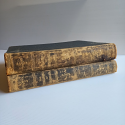
The Cyclopedias published for most Australian states around the turn of the 20th century are major resources for historical and biographical research — and this is the original Tasmanian volume. Together, the two volumes contain over 1,500 biographies and more than 1,700 portrait photographs, covering not only the prominent citizens of the day but a large proportion of ordinary Tasmanians in every community — tradespeople, farmers, shopkeepers and professionals alongside politicians and businessmen.