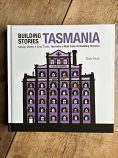
Building Stories Tasmania is an illustrated tour of Tasmania's most distinctive buildings - working waterfronts, former hydro sites, pubs, bookshops, hotels, theatres and small-town main streets - told through the people who built, worked and lived in them: convicts, clergy, brewers, booksellers and activists.

A small but mighty hardback book of Tasmanian photographs is a great memento of Tasmania for any traveller.
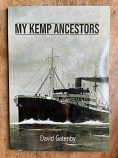
My Kemp Ancestors traces six generations of David Gatenby's Kemp family line, opening on the Isle of Sheppey before following the family chapter by chapter from William Kemp and Amelia Fowler onwards.
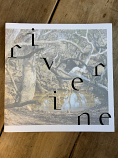
Riverine documents four autumns of collaborative work by artists Raymond Arnold, Ian Westacott and John Wolseley, camped along the Banyena/Richardson River at Bonnie Brae, a regeneratively managed farm in Victoria's Wimmera region; the book brings together more than 50 paintings, watercolours and etchings with essays by farm steward Prue McAllister and the three artists.
L.J. Morley's history of Tasmania's working trucks from 1909 to 1970 - from Mt Lyell mining trucks and Huon apple trucks to Hobart's fire engines and wartime army vehicles, with hundreds of photographs.
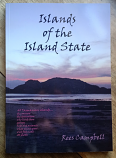
Rees Campbell, author of the bestselling Eat MORE Wild Tasmanian, turns her attention to Tasmania's off-shore islands. There are some 6,500 islands, islets, rocks and reefs around the state, and this book visits 40 of them — from the largest, Flinders Island, to the remote and uninhabited Pedra Branca and Mewstone in the Southern Ocean, to some of the smallest and closest, like the Harbour Islets in the state's far North West.

Finalist stories from Forty South's Tasmanian Writers' Prize 2026, an annual short story competition open to writers in Australia and New Zealand on an island, or island-resonant, theme.

Peter Hughes's comprehensive study of furniture made in Van Diemen's Land during the early colonial period — the most thorough treatment of this subject since Craig, Fahy and Robertson's Early Colonial Furniture in New South Wales and Van Diemen's Land (1972).

A close study of the 186 carved decorations on the Ross Bridge — the convict-built sandstone bridge that has spanned the Macquarie River at Ross since 1836, and one of the most visited historic sites in Tasmania. The carvings were the work of Daniel Herbert, a transported convict who was a stonemason by trade.