
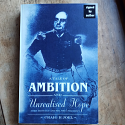
Sir John Franklin arrived to govern Van Diemen's Land in 1837, already well known for his Arctic exploration, but with no experience of colonial administration. He succeeded Sir George Arthur, whose twelve years running the colony with a firm, practised hand left large shoes to fill — and Franklin soon found himself at odds with Arthur's own former Colonial Secretary, John Montagu, still deeply entrenched in the Hobart bureaucracy.
![A Terrible Beauty – History of the Gordon River Country | Richard Flanagan | 1985 [USED – SC – Out of Print]](https://onlinestore.bookcellar.com.au/images/T/a-terrible-beauty-nEJQhj.png "A Terrible Beauty – History of the Gordon River Country | Richard Flanagan | 1985 [USED – SC – Out of Print]")
Richard Flanagan's first book — published in 1985, more than a decade before his fiction career began, and long before The Narrow Road to the Deep North won the Man Booker Prize in 2014. A Terrible Beauty is a history of the Gordon River country in Tasmania's south-west wilderness — the landscape that was at the centre of the Franklin Dam controversy in the early 1980s.
![A Thematic History of South Hobart – A Favourable Progression | Ian Terry | 2003 [NEW – SC]](https://onlinestore.bookcellar.com.au/images/T/thematic-history-south-hobart-8vaQdC.png "A Thematic History of South Hobart – A Favourable Progression | Ian Terry | 2003 [NEW – SC]")
Ian Terry's thematic history of South Hobart — analysing the historical geography and development of the district from its earliest European settlement through to the present, identifying the themes that have shaped the suburb's character and built environment.