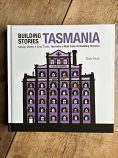
Building Stories Tasmania is an illustrated tour of Tasmania's most distinctive buildings - working waterfronts, former hydro sites, pubs, bookshops, hotels, theatres and small-town main streets - told through the people who built, worked and lived in them: convicts, clergy, brewers, booksellers and activists.
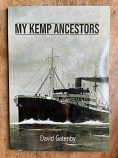
My Kemp Ancestors traces six generations of David Gatenby's Kemp family line, opening on the Isle of Sheppey before following the family chapter by chapter from William Kemp and Amelia Fowler onwards.
Our price:AUD 39.95
including GST
10.00
% (
AUD 3.63
)
Just Tassie Books
Browse thousands of Tasmanian books at The Book Cellar - convict history, local and family history, Aboriginal Tasmania, maritime, art, nature and fiction, new and out of print. Books ship from Campbell Town, Tasmania.
The Real Food Companion by Tasmania's gourmet farmer Matthew Evans includes more than 200 recipes with the aim of teaching readers how to ethically source, cook and eat real food.
At its peak, Gunns Ltd had a market value of $1 billion, was listed on the ASX 200, was the largest employer in Tasmania and its largest private landowner.
This binder volume brings together 22 surviving issues of The Rising Sun, also known as Square the Dink, the weekly newsletter produced by soldiers at Claremont Camp, Tasmania's main AIF training camp during WWI.
Geoff Law first rafted the Franklin River on a whim, inexperienced, in a leaky raft, with a travelling companion he barely knew. That trip drew him into the campaign to stop the river being dammed — a struggle that brought down a federal government.
The Rock Which Makes Tasmania (Tasmania's Curse) examines dolerite, the rock that caps much of the state's mountains and coastline, and its influence on Tasmanian landscape and geology.
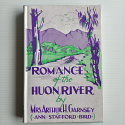
A history and description of the Huon River district south of Hobart, written by Anne Stafford Bird under her married name Mrs Arthur H. Garnsey and published by Whitcombe & Tombs, undated but around 1947. The Huon district — with its apple orchards, timber industry, fishing communities and the settlements along the river from Huonville south to Geeveston and beyond — had a distinct and largely self-contained character through the first half of the 20th century, before roads and postwar development changed the valley.
Tim Jetson's history of Tasmania's Central Plateau — the high tableland at the heart of the island, bounded by the Western Tiers to the east and the wilderness to the west, and encompassing the lake country around Great Lake, Arthurs Lake, Lake Echo and the surrounding highland waters.