- per page

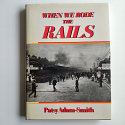
Patsy Adam-Smith's history of Australia's railway age, drawing on the stories, memories and folklore of the men and women who worked the railways across the country.
![Where the Slime Mould Creeps – The Fascinating World of Myxomycetes | Sarah Lloyd | 2015 [USED – SC – Very Good]](https://onlinestore.bookcellar.com.au/images/T/where-the-slime-mould-ORMe8D.png "Where the Slime Mould Creeps – The Fascinating World of Myxomycetes | Sarah Lloyd | 2015 [USED – SC – Very Good]")
Sarah Lloyd's exploration of myxomycetes — the slime moulds — published by the author in 2015. Myxomycetes are among the most extraordinary organisms in the natural world: neither fungi, nor plants, nor animals. They exist as single-celled amoebae, then aggregate into a flowing mass that moves as a single organism in search of food, before forming fruiting bodies to spread spores.
![Where to See Wildlife in Tasmania | Dave Watts & Cathie Plowman | 2008 [SC]](https://onlinestore.bookcellar.com.au/images/T/where-to-see-wildlife-in-tasmania-Job7DA.png "Where to See Wildlife in Tasmania | Dave Watts & Cathie Plowman | 2008 [SC]")
A guide to 29 specific locations across Tasmania where you have a good chance of seeing native wildlife in the field — written by wildlife photographer Dave Watts and Cathie Plowman and published in 2008. Each location entry covers what you're likely to see there, the best time of day and year to visit, and practical notes on access
![While History Passed | Jessie Elizabeth Simons | 1954 [USED – HCDJ – Worn]](https://onlinestore.bookcellar.com.au/images/T/while-history-passed-cwC33l.png "While History Passed | Jessie Elizabeth Simons | 1954 [USED – HCDJ – Worn]")
Jessie Elizabeth Simons's first-hand account of her three and a half years as a prisoner of the Japanese during the Second World War — one of the Australian nurses captured in the fall of Singapore in February 1942 and held captive until the Japanese surrender in 1945. Simons was Tasmanian. Her account, published in 1954, is one of the earliest first-hand records by an Australian Army nurse of the prisoner of war experience in the Pacific — written while the events were relatively fresh and before the wave of later memoirs and histories shaped how this story was told.
![Whispering Death – A History of the RAAF's Beaufighter Squadrons | Neville Parnell | First Edition 1980 [USED – HCDJ – Good]](https://onlinestore.bookcellar.com.au/images/T/Whispering%20Death-g9G5e5.png "Whispering Death – A History of the RAAF's Beaufighter Squadrons | Neville Parnell | First Edition 1980 [USED – HCDJ – Good]")
Neville Parnell's history of the RAAF's Bristol Beaufighter squadrons in the Second World War — No. 30, 31 and 92 Squadrons, 77 Wing, 93 Training Squadron and 5 OTU. The Beaufighter was a heavy fighter derived from the Beaufort torpedo bomber, flying with the RAAF from 1942 in the anti-shipping and ground attack role across the South West Pacific.