- per page

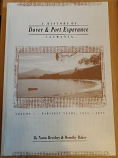
The first volume in Norm Beechey and Dorothy Baker's history of Dover and Port Esperance — the small community on the shore of Port Esperance Bay in southern Tasmania, some 90km south of Hobart. This volume covers the earliest years of European settlement in the area from 1845 to 1875 — the establishment of the settlement, the convict station at Dover, the first families who took up land in the district, the Hope Island timber industry, the early timber-getters and farmers, and the community institutions including the Good Templars and the early churches and schools.
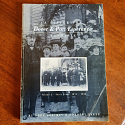
The second volume in Norm Beechey and Dorothy Baker's history of Dover and Port Esperance, covering the later years from 1875 to 1925. This volume picks up where Volume 1 left off — documenting the development of the district through the sawmilling era, apple growing and the challenges of codlin moth, the trade union movement in the timber industry, the extension of the electric telegraph, the local steamers Ivy, Reliance and Dover that connected the community to Hobart, WWI soldiers, Spanish flu, whaling, and the eucalyptus oil distillation industry.
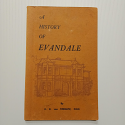
K.R. von Stieglitz's short history of Evandale — one of the best-preserved colonial towns in northern Tasmania, situated on the South Esk River south of Launceston. Evandale was gazetted in 1836 and its streetscape of Georgian and colonial architecture remains largely intact, giving it a distinctive character among Tasmanian towns.
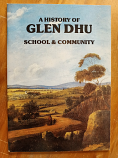
Gold was discovered in the tributaries of the Pieman River from the late 1870s, and the boomtown of Corinna sprang up at a key river crossing point, becoming a jumping-off point for prospectors pushing on to Mount Heemskirk, Zeehan and Mount Lyell.
A History of Kangaroo Valley - Lenah Valley 1847-1995 covers the Hobart suburb from 1847 through to 1995, under its original name of Kangaroo Valley before its 1922 renaming to Lenah Valley (a Muwinina word for kangaroo).
Oatlands, established in 1821 and named by Governor Macquarie after a town in Surrey, England, holds Australia's largest collection of Georgian sandstone buildings in a village setting, much of it built with convict labour quarried locally from around Lake Dulverton. Nearby Jericho, one of Tasmania's oldest townships, dating from 1816 was also the site of an early convict probation station. K.R. von Stieglitz tells the history of both towns in this booklet.
Faye Gardam's history of Port Sorell covers the district from Aboriginal occupation through to 1994 — the naming and surveying of the area, its streets and features, buildings and organisations, and local flora and fauna, along with a chapter of local stories ("A Few Good Stories!").