![John Bowen's Hobart – The Beginning of European Settlement in Tasmania | Phillip Tardif | 2003 [USED – SC – Out of Print]](https://onlinestore.bookcellar.com.au/images/T/john-bowens-hobart-r1eM4i.png "John Bowen's Hobart – The Beginning of European Settlement in Tasmania | Phillip Tardif | 2003 [USED – SC – Out of Print]")
Phillip Tardif's history of the earliest European settlement in Tasmania — focusing on Lieutenant John Bowen's 1803 establishment of the first European settlement at Risdon Cove on the Derwent River, and the subsequent founding of what became Hobart Town under Lieutenant Colonel David Collins in 1804.

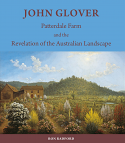
Colonial artist John Glover's Patterdale Farm and the revelation of the Australian landscape in northern Tasmania.
![John Glover - The Van Diemen's Land Sketchbook of 1832-1834, facsimile of Sketchbook No. 97, David Hansen essay, TMAG 2003 [USED – SC]](https://onlinestore.bookcellar.com.au/images/T/john-glove-the-van-diemens-land-sketchbook-apPcwk.png "John Glover - The Van Diemen's Land Sketchbook of 1832-1834, facsimile of Sketchbook No. 97, David Hansen essay, TMAG 2003 [USED – SC]")
A facsimile of John Glover's sketchbook no.97 1832-34 produced in conjunction with the Tasmanian Museum and Art Gallery 2003 national touring exhibition entitled John Glover and the Colonial Picturesque.
![John Glover and the Colonial Picturesque | Tasmanian Museum and Art Gallery | 2003 [USED – HC]](https://onlinestore.bookcellar.com.au/images/T/IMG_1717-hg04yN.png "John Glover and the Colonial Picturesque | Tasmanian Museum and Art Gallery | 2003 [USED – HC]")
The catalogue produced to accompany the major 2003 Tasmanian Museum and Art Gallery exhibition on John Glover — the English landscape painter who emigrated to Tasmania in 1831 at the age of 63 and spent the last eighteen years of his life painting the Tasmanian landscape at his property Patterdale near Evandale. Glover arrived in Van Diemen's Land having already established a considerable reputation as a landscape painter in Britain, where he had exhibited at the Royal Academy.
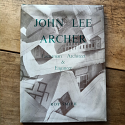
John Lee Archer (1791–1852) was Van Diemen's Land's first Colonial Architect and Civil Engineer, serving from 1827 to 1838 and responsible for virtually all government-commissioned buildings during that period. His works include Hobart's Parliament House (originally the Customs House), the Treasury and Ordnance Stores buildings, several buildings at Anglesea Barracks, numerous churches across the colony, the Low Head and Cape Bruny lighthouses, the Bridgewater Causeway and the Ross Bridge.
A reconstruction of Jorgen Jorgenson's 'lost' book on Tasmanian aboriginal customs and habits, and on his role in Van Diemen's Land roving parties and the Black Line.