
James Fenton emigrated from Ireland with his family in 1834, and from 1840 pioneered farming land on Tasmania's Forth River, clearing heavy forest by hand. After visiting the Yarra during Victoria's 1850s gold rush, he saw a market for timber and turned to lumbering on the Forth before retiring from farming in 1879.
![Bush Lives 2 – More Tales from the Tasmanian Back Blocks | Nic Haygarth | 2025 [NEW – SC]](https://onlinestore.bookcellar.com.au/images/T/bush-lives2-IWWjpZ.png "Bush Lives 2 – More Tales from the Tasmanian Back Blocks | Nic Haygarth | 2025 [NEW – SC]")
The second volume of Nic Haygarth's collection of stories from the Tasmanian bush — 300 pages of tales drawn from the back blocks of the island, covering the people, places and ways of life that define rural and remote Tasmania. Haygarth has spent years researching and writing about Tasmanian bush history, and this second volume follows the same approach as the first — oral histories, anecdotes, characters and incidents from across the state's rural and wilderness fringes.
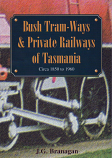
This Tasmanian transport history book recounts a period from around 1850 to 1960 when men battled almost overwhelming odds to carve a living out of an unforgiving land.


![Butterfly on a Pin – A Fashion Designer's Memoir of Love, Despair and Reinvention | Alannah Hill | 2018 [USED – SC]](https://onlinestore.bookcellar.com.au/images/T/butterfly-on-a-pin-sc-JqpwFq.png "Butterfly on a Pin – A Fashion Designer's Memoir of Love, Despair and Reinvention | Alannah Hill | 2018 [USED – SC]")
Alannah Hill's memoir of her life and career — from a difficult childhood on Tasmania's northwest coast, where her parents ran the milk bar in Penguin, through her rise to become one of Australia's most recognisable and idiosyncratic fashion designers, and her eventual exit from the label that bore her name.
![By Derwent Divided – The Lake Illawarra, the Tasman Bridge and the 1975 Disaster | Tom Lewis | 3rd Edition 2025 [HC]](https://onlinestore.bookcellar.com.au/images/T/byderwentdivided-2025-lzhjkG.png "By Derwent Divided – The Lake Illawarra, the Tasman Bridge and the 1975 Disaster | Tom Lewis | 3rd Edition 2025 [HC]")
On 5 January 1975 the bulk carrier Lake Illawarra struck two of the pylons of Hobart's Tasman Bridge, bringing down two spans of the bridge and sinking the ship in the Derwent River. Seven crew members and two people on the bridge were killed. The collapse divided Hobart for nearly two years — cutting the city in half and forcing residents on the eastern shore to take lengthy detours or use a ferry service until the bridge reopened in October 1977.