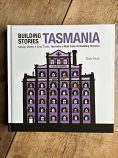
Building Stories Tasmania is an illustrated tour of Tasmania's most distinctive buildings - working waterfronts, former hydro sites, pubs, bookshops, hotels, theatres and small-town main streets - told through the people who built, worked and lived in them: convicts, clergy, brewers, booksellers and activists.
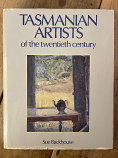
Sue Backhouse's reference work profiles Tasmanian painters, sculptors, printmakers and photographers active between 1900 and 1985, published by Pandani Press in 1988.
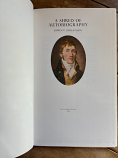
Jorgen Jorgenson (1780–1841) was a Danish-born adventurer who briefly ruled Iceland as a self-appointed administrator in 1809, earning him the nickname 'the Convict King'. Transported to Van Diemen's Land in 1826, he worked there as an explorer, constable — including in parties sent against Tasmanian Aboriginal people — and newspaper editor, before receiving a full pardon in 1835.
Our price:AUD 145.00
including GST
10.00
% (
AUD 13.18
)
OUT of PRINT
Tasmanian titles no longer available new, sourced as quality used copies. If a book you're after isn't in stock, check back — we regularly source out-of-print titles.
The two-volume auction catalogue produced by Christie's for the sale of Dr Clifford Craig's collection of Van Diemen's Land and Tasmanian material — held in Launceston in October 1975. Clifford Craig was one of the most significant collectors of Tasmanian Tasmaniana of the 20th century — his bibliographical studies of early Tasmanian printing and colonial furniture remain the standard references in their fields.
A collection of letters written from Van Diemen's Land to Sir William Hooker — director of the Royal Botanic Gardens at Kew — between 1827 and 1849, compiled by T.E. Burns and J.R. Skemp. The correspondents include Ronald Campbell Gunn, Van Diemen's Land's most important colonial botanist; R.W. Lawrence; Jorgen Jorgenson — the extraordinary Dane who briefly became King of Iceland before being transported to Van Diemen's Land (the subject of Dan Sprod's biography The Usurper); and Sir John Franklin, Lieutenant-Governor of Van Diemen's Land 1837–1843.
James Boyce's reinterpretation of Van Diemen's Land's early history — arguing that the convicts who arrived in the colony were transformed by the natural world they encountered, actively adapting to their new environment rather than simply enduring it. Almost half of all convicts transported to Australia came to Van Diemen's Land.
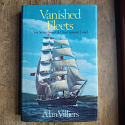
Alan Villiers went to sea at 15, and became one of the last captains of a commercial square-rigged sailing ship. Vanished Fleets gathers his stories of Van Diemen's Land's maritime history — pirates, whalemen, escaped convicts, adventurers and pioneers.
Frank Bolt's photographic record of aspects of Tasmania that were disappearing at the time of publication — old buildings, rural structures, weathered farmhouses, abandoned machinery, forgotten corners of the landscape that were being lost to time, development and neglect.
Michael Holmes's guide to the ghost towns and lost settlements of Tasmania — the places that once lived, occasionally thrived, and then disappeared, leaving varying degrees of evidence that they ever existed.
Memoirs from Sir William and Lady Caroline Denison of their time in Van Diemen's Land when he was Governor, acting from 1847 as the interface between convict Van Diemen's Land and self-governing Tasmania.
Veils and Tin Hats captures the history of the more than 200 Tasmanian nurses enlisted in Australian and British military forces during the Second World War.
Kathy Gatenby's biography of Viv and Hilda Robey, whose family farmed the southern end of Maria Island until it became a national park in 1971 - one of the island's last farming families.