Building Stories Tasmania is an illustrated tour of Tasmania's most distinctive buildings - working waterfronts, former hydro sites, pubs, bookshops, hotels, theatres and small-town main streets - told through the people who built, worked and lived in them: convicts, clergy, brewers, booksellers and activists.
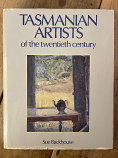
Sue Backhouse's reference work profiles Tasmanian painters, sculptors, printmakers and photographers active between 1900 and 1985, published by Pandani Press in 1988.
Jorgen Jorgenson (1780–1841) was a Danish-born adventurer who briefly ruled Iceland as a self-appointed administrator in 1809, earning him the nickname 'the Convict King'. Transported to Van Diemen's Land in 1826, he worked there as an explorer, constable — including in parties sent against Tasmanian Aboriginal people — and newspaper editor, before receiving a full pardon in 1835.
Our price:AUD 145.00
including GST
10.00
% (
AUD 13.18
)
OUT of PRINT
Tasmanian titles no longer available new, sourced as quality used copies. If a book you're after isn't in stock, check back — we regularly source out-of-print titles.
A facsimile of George Hamilton's 1793 account of the voyage of HMS Pandora — the Royal Navy frigate sent to arrest the Bounty mutineers in the South Seas. Hamilton was the ship's surgeon and the only eyewitness to publish a full contemporary account of the voyage.
The photo-illustrated logs of Frank Styant Browne's travels through the North East of Tasmania, and west from Launceston through Deloraine in the 1890s.
Pam Wood's historical novel based on the life of Henry Gardiner — the first European ferryman on the Arthur River in Tasmania's northwest wilderness, who operated the crossing from 1878 to 1913. Gardiner was born in London in 1834 and came to Tasmania's developing colony, eventually taking the ferryman's role on the remote Arthur River in the Tarkine — one of the most isolated positions in the colony.
A Tasmanian geologist, describes 65 walks across southern Tasmania, from Mt Wellington and the Wellington Range through to the Tasman Peninsula. Each walk pairs track notes with the history — and at times the contested land-use issues — connected to the place.