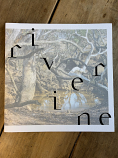
Riverine documents four autumns of collaborative work by artists Raymond Arnold, Ian Westacott and John Wolseley, camped along the Banyena/Richardson River at Bonnie Brae, a regeneratively managed farm in Victoria's Wimmera region; the book brings together more than 50 paintings, watercolours and etchings with essays by farm steward Prue McAllister and the three artists.
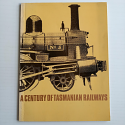
L.J. Morley's history of Tasmania's working trucks from 1909 to 1970 - from Mt Lyell mining trucks and Huon apple trucks to Hobart's fire engines and wartime army vehicles, with hundreds of photographs.
Rees Campbell, author of the bestselling Eat MORE Wild Tasmanian, turns her attention to Tasmania's off-shore islands. There are some 6,500 islands, islets, rocks and reefs around the state, and this book visits 40 of them — from the largest, Flinders Island, to the remote and uninhabited Pedra Branca and Mewstone in the Southern Ocean, to some of the smallest and closest, like the Harbour Islets in the state's far North West.
Our price:AUD 75.00
including GST
10.00
% (
AUD 6.82
)
Just Tassie Books
Browse thousands of Tasmanian books at The Book Cellar - convict history, local and family history, Aboriginal Tasmania, maritime, art, nature and fiction, new and out of print. Books ship from Campbell Town, Tasmania.
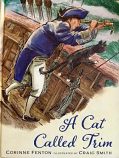
This is the true story of a courageous, mischievous and fearless cat called Trim, who sailed with Matthew Flinders on his voyages to map the coastline of Australia and beyond.
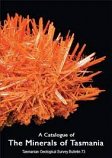
Geological Survey Bulletin 73 — an alphabetical, illustrated catalogue of every mineral species recorded in Tasmania, compiled by R.S. Bottrill and W.E. Baker and published by Mineral Resources Tasmania in May 2021. Tasmania has an unusually rich and diverse mineralogy, a product of its complex geological history and its long mining heritage on the west coast and elsewhere. This catalogue documents that diversity systematically.
An illustrated history of the Devon Cottage Hospital, the Devon Public Hospital and the Mersey General Hospital in Latrobe, northern Tasmania — tracing a century of hospital care in the region from 1887 to 1987. Written by John R. Wilson and published as a numbered limited edition of 1,000 copies to mark the centenary.
Robert Cox's chronological account of 19th-century Tasmanian serial murderers — beginning in 1806 and covering some of the most disturbing criminal cases in the colony's history.
![Islands of the Island State - Rees Campbell explores 40 of Tasmania's 6,500 offshore islands, their history & wild food | 2026 [NEW – SC]](https://onlinestore.bookcellar.com.au/images/T/islands-of-the-island-state-tTnn8f.png "Islands of the Island State - Rees Campbell explores 40 of Tasmania's 6,500 offshore islands, their history & wild food | 2026 [NEW – SC]")



![A Century of Caring – Latrobe's Hospital 1887–1987 | John R. Wilson | 1987 | Numbered 793/1000 [USED – HCDJ]](https://onlinestore.bookcellar.com.au/images/T/century-of-caring-latrobe-xhLJsr.png "A Century of Caring – Latrobe's Hospital 1887–1987 | John R. Wilson | 1987 | Numbered 793/1000 [USED – HCDJ]")
![A Compulsion to Kill – The History of Tasmania's Earliest Serial Killers | Robert Cox | 2014 [SC]](https://onlinestore.bookcellar.com.au/images/T/a-compulsion-to-kill-umkX6z.png "A Compulsion to Kill – The History of Tasmania's Earliest Serial Killers | Robert Cox | 2014 [SC]")