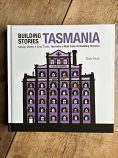
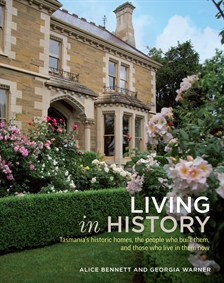
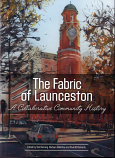
Building Stories Tasmania is an illustrated tour of Tasmania's most distinctive buildings - working waterfronts, former hydro sites, pubs, bookshops, hotels, theatres and small-town main streets - told through the people who built, worked and lived in them: convicts, clergy, brewers, booksellers and activists.
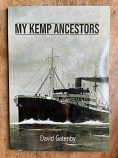
My Kemp Ancestors traces six generations of David Gatenby's Kemp family line, opening on the Isle of Sheppey before following the family chapter by chapter from William Kemp and Amelia Fowler onwards.
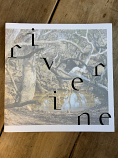
Riverine documents four autumns of collaborative work by artists Raymond Arnold, Ian Westacott and John Wolseley, camped along the Banyena/Richardson River at Bonnie Brae, a regeneratively managed farm in Victoria's Wimmera region; the book brings together more than 50 paintings, watercolours and etchings with essays by farm steward Prue McAllister and the three artists.
Our price:AUD 45.00
including GST
10.00
% (
AUD 4.09
)
Just Tassie Books
Browse thousands of Tasmanian books at The Book Cellar - convict history, local and family history, Aboriginal Tasmania, maritime, art, nature and fiction, new and out of print. Books ship from Campbell Town, Tasmania.
A prison diary, a story of brotherly love, a journey of redemption, Martin Flanagan's compelling book about his boarding school days goes inside an experience many have had but few have talked about.
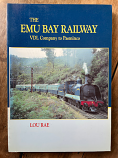
The Emu Bay Railway VDL Company to Pasminco by Lou Rae traces the railway linking Tasmania's west coast mining fields to the coast, from its origins with the Van Diemen's Land Company and the Emu Bay and Mount Bischoff Railway, through the battle to construct a line to Zeehan, and on through war, depression, modernisation and new ownership to the Pasminco era by 1991.
The centenary history of the Emu Bay Railway Company in Tasmania, written by Lou Rae and published in a second edition in 1997. The Emu Bay Railway was a privately owned line running from Burnie on the north-west coast into the mineral-rich hinterland of western Tasmania — connecting the mining towns of Zeehan, Rosebery and Queenstown to the coast.
From King of Iceland to Tasmanian convict, Jorgen Jorgenson was a Dane who made Britain his adopted country - restless for adventure, he began his career by sailing to establish the new colony of Tasmania.
A close study of the 186 carved decorations on the Ross Bridge — the convict-built sandstone bridge that has spanned the Macquarie River at Ross since 1836, and one of the most visited historic sites in Tasmania. The carvings were the work of Daniel Herbert, a transported convict who was a stonemason by trade.
The primary source documents underlying John Thomas Bigge's 1822–1823 reports to the British Government on the state of New South Wales under Governor Lachlan Macquarie. Bigge was commissioned to investigate the running of the colony — its convict management, land grants, public works, and Macquarie's controversial policies — and his reports had significant consequences for the direction of Australian colonial administration.