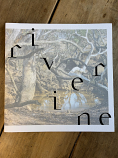
Riverine documents four autumns of collaborative work by artists Raymond Arnold, Ian Westacott and John Wolseley, camped along the Banyena/Richardson River at Bonnie Brae, a regeneratively managed farm in Victoria's Wimmera region; the book brings together more than 50 paintings, watercolours and etchings with essays by farm steward Prue McAllister and the three artists.
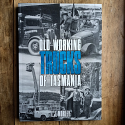
L.J. Morley's history of Tasmania's working trucks from 1909 to 1970 - from Mt Lyell mining trucks and Huon apple trucks to Hobart's fire engines and wartime army vehicles, with hundreds of photographs.
Rees Campbell, author of the bestselling Eat MORE Wild Tasmanian, turns her attention to Tasmania's off-shore islands. There are some 6,500 islands, islets, rocks and reefs around the state, and this book visits 40 of them — from the largest, Flinders Island, to the remote and uninhabited Pedra Branca and Mewstone in the Southern Ocean, to some of the smallest and closest, like the Harbour Islets in the state's far North West.
Our price:AUD 75.00
including GST
10.00
% (
AUD 6.82
)
Just Tassie Books
Browse thousands of Tasmanian books at The Book Cellar - convict history, local and family history, Aboriginal Tasmania, maritime, art, nature and fiction, new and out of print. Books ship from Campbell Town, Tasmania.
Nick Anchen's photographic and oral history of Tasmanian railways across the second half of the 20th century — combining the memories of the men and women who worked the TGR (Tasmanian Government Railways) and its successors with the work of some of Australia's leading railway photographers.
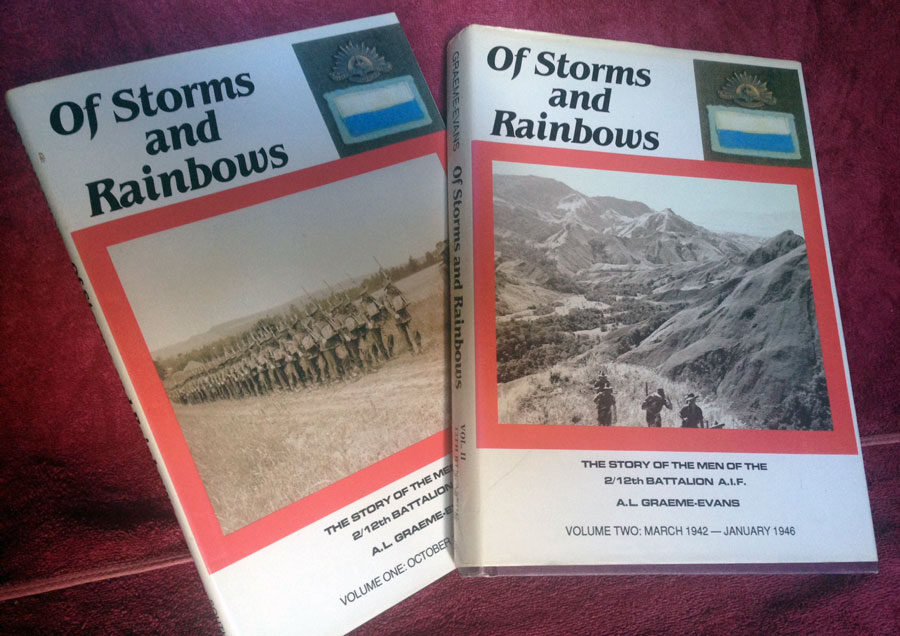
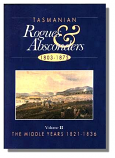
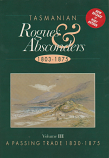
Alex Graeme-Evans's history of the rogues, absconders and escapees of Van Diemen's Land in its earliest years — covering the period from the founding of the colony in 1803 through to 1821. This is Volume 1 of a trilogy. Other volumes are also available from The Book Cellar.
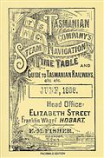
This is a modern facsimile publication of the Tasmanian timetable from June 1888 that gave all times and fare for shipping, trains, cabs, omnibuses, coaches and mails.
A field guide to the common plants found along Tasmanian stream banks — covering trees, shrubs, ferns, grasses, sedges and rushes, and herbs found in the riparian zone alongside Tasmanian waterways.
![Islands of the Island State - Rees Campbell explores 40 of Tasmania's 6,500 offshore islands, their history & wild food | 2026 [NEW – SC]](https://onlinestore.bookcellar.com.au/images/T/islands-of-the-island-state-tTnn8f.png "Islands of the Island State - Rees Campbell explores 40 of Tasmania's 6,500 offshore islands, their history & wild food | 2026 [NEW – SC]")


![Tasmanian Railways 1950–2000 | Nick Anchen | 2020 | Signed by Author [USED – HC – Good]](https://onlinestore.bookcellar.com.au/images/T/tasmanian-railways-1950-anchen-SqQQD4.png "Tasmanian Railways 1950–2000 | Nick Anchen | 2020 | Signed by Author [USED – HC – Good]")
![Tasmanian Rogues & Absconders – Volume 1: New Frontiers 1803–1821 | Alex Graeme-Evans | 1994 | Signed by Author [USED – SC – Very Good]](https://onlinestore.bookcellar.com.au/images/T/tasmanian-rogues-and-absconders-one-Rbj3Rz.png "Tasmanian Rogues & Absconders – Volume 1: New Frontiers 1803–1821 | Alex Graeme-Evans | 1994 | Signed by Author [USED – SC – Very Good]")
![Tasmanian Streambank Plants – A Guide to Common Plants Along Streams | Rae Glazik & Michael Askey-Doran | 2004 [USED – SC – Out of Print]](https://onlinestore.bookcellar.com.au/images/T/tasmanian-streambank-plants-bSVudb.png "Tasmanian Streambank Plants – A Guide to Common Plants Along Streams | Rae Glazik & Michael Askey-Doran | 2004 [USED – SC – Out of Print]")