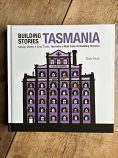
Building Stories Tasmania is an illustrated tour of Tasmania's most distinctive buildings - working waterfronts, former hydro sites, pubs, bookshops, hotels, theatres and small-town main streets - told through the people who built, worked and lived in them: convicts, clergy, brewers, booksellers and activists.
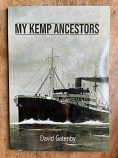
My Kemp Ancestors traces six generations of David Gatenby's Kemp family line, opening on the Isle of Sheppey before following the family chapter by chapter from William Kemp and Amelia Fowler onwards.
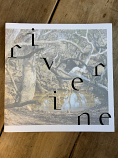
Riverine documents four autumns of collaborative work by artists Raymond Arnold, Ian Westacott and John Wolseley, camped along the Banyena/Richardson River at Bonnie Brae, a regeneratively managed farm in Victoria's Wimmera region; the book brings together more than 50 paintings, watercolours and etchings with essays by farm steward Prue McAllister and the three artists.
Our price:AUD 45.00
including GST
10.00
% (
AUD 4.09
)
Just Tassie Books
Browse thousands of Tasmanian books at The Book Cellar - convict history, local and family history, Aboriginal Tasmania, maritime, art, nature and fiction, new and out of print. Books ship from Campbell Town, Tasmania.
Bern Cuthbertson's signed memoir of seventy years at sea in Tasmania - skippering vessels including the Weeruna, the schooner Derwent Hunter and the historic Admiral, and working the state's fishing grounds for trevalla and blue-eye.
A concise guide to Tasmania's three snake species — the Tiger Snake, Lowland Copperhead and White-lipped Snake — all venomous to varying degrees. Written by Simon Fearn and published by the Queen Victoria Museum and Art Gallery (QVMAG) as part of their Natural History Series.
Simon Cubit's history of the Lee family and their work as snarers and cattlemen in the Mersey High Country — the remote high country of Tasmania's Central Plateau above the Mersey Valley, centred on Lees' Paddocks near the headwaters of the Mersey River. The Lee family spent generations working this remote country — running cattle on the high plateau in summer, snaring possums through the colder months, and living a way of life that has since largely disappeared.
What we do to the soil, we do to ourselves. If we want our food to nourish us, and to ensure our planet's long-term health, we need to understand how soil works - how it's made, how it's lost, and how it can be repaired.
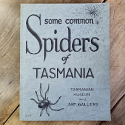
VVHickman OBE was Professor of Biology at the University of Tasmania 1943-1959, and became recognised as Australia's leading arachnologist. He personally described numerous Tasmanian spider species, including the Tasmanian funnel-web spider, and was honoured with an entire genus and family named after him — Hickmania and Hickmaniidae, the Tasmanian cave spider. This guide introduces Tasmania's common spiders through his own photographs and detailed drawings.
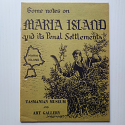
Maria Island, off Tasmania's east coast, operated as a convict penal settlement from 1825 to 1832 — established to ease overcrowding at Hobart — before closing due to frequent escapes and reopening as a probation station from 1842 to 1850. Darlington, at the island's north, is today regarded as the most intact surviving example of a convict probation station in Australia, and is UNESCO World Heritage-listed as part of the Australian Convict Sites.
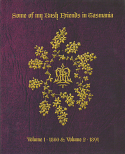
A beautiful facsimile edition of Louisa Anne Meredith's Bush Friends of Tasmania original published in 1860 with the 2nd volume following some 31 years later.