- per page

![British & Commonwealth Bayonets – Including Fakes and Reproductions | Ian Skennerton & Robert Richardson | 1986 [USED – HC – Very Good]](https://onlinestore.bookcellar.com.au/images/T/British%20%26%20Commonwealth%20Bayonets%201-UPCul6.png "British & Commonwealth Bayonets – Including Fakes and Reproductions | Ian Skennerton & Robert Richardson | 1986 [USED – HC – Very Good]")
The standard reference on British and Commonwealth bayonets, written by Ian Skennerton and Robert Richardson and published in 1986.
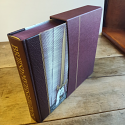
This Folio Society volume compiles a comprehensive selection of traditional British folklore, myths, and early legends, spanning from the tales of King Arthur and Robin Hood to regional ghost stories and foundational cultural fables.
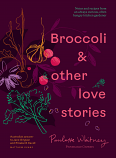
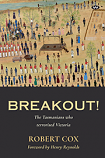
![Broken Spear - Black Tom Birch, the Aboriginal Patriot Blamed for Sparking Australia's Bloodiest War | Robert Cox | 2021 [NEW – SC]](https://onlinestore.bookcellar.com.au/images/T/Broken-spear-t2IwGw.png "Broken Spear - Black Tom Birch, the Aboriginal Patriot Blamed for Sparking Australia's Bloodiest War | Robert Cox | 2021 [NEW – SC]")
The true story of Black Tom Birch of Van Diemen's Land - a charismatic Aboriginal patriot and his unending fight against colonial invasion.
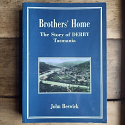
Derby, in Tasmania's North-East, began life as "Brothers' Home" — the name given to the settlement that grew around the Krushka brothers' tin mine, discovered in 1876. Renamed Derby in 1887, the town grew to over 3,000 people at its mining peak, with the Briseis Mine becoming one of the richest tin mines in the world.
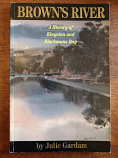
A history of Kingston and Blackmans Bay in southern Tasmania, by Julie Gardam. The district takes its original name from Brown's River, named after botanist Robert Brown, who collected plant samples there in 1804 — known to the area's Aboriginal people as promenalinah.