- per page

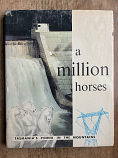
A Million Horses - Tasmania's Power in the Mountains - R.M.H. Garvie |HCDJ out of print|
Compiled by R.M.H. Garvie, assistant to the Hydro-Electric Commissioner, to mark roughly fifty years of hydro-electricity in Tasmania.
Our price: AUD 75.00
including GST
10.00
% (
AUD 6.82
)
A Miscellany of Tasmaniana - Selected Vice-Regal Speeches
William Cox's excerpts from speeches he gave as Governor of Tasmania (2004-2008).
Our price: AUD 15.00
including GST
10.00
% (
AUD 1.36
)
A Monograph of Nototherium Tasmanicum (1915) - Extinct Megafauna & Diprotodontidae Osteology
A study based on fossilised remains of Tasmania's giant wombat, published by the Tasmanian Department of Mines as Geological Survey Record no.4.
• Diprotodontidae / Diprotodontid fossil morphology
• Vombatiforms and Pleistocene megafauna
• Osteology of extinct Australian marsupials
• Diprotodontidae / Diprotodontid fossil morphology
• Vombatiforms and Pleistocene megafauna
• Osteology of extinct Australian marsupials
Our price: AUD 85.00
including GST
10.00
% (
AUD 7.73
)
![A Mortal Flame – Marie Bjelke Petersen, Australian Romance Writer 1874–1969 | Alison Alexander | 1994 [USED – SC – Out of Print]](https://onlinestore.bookcellar.com.au/images/T/a-mortal-flame.jpg "A Mortal Flame – Marie Bjelke Petersen, Australian Romance Writer 1874–1969 | Alison Alexander | 1994 [USED – SC – Out of Print]")
A Mortal Flame – Marie Bjelke Petersen, Australian Romance Writer 1874–1969 | Alison Alexander | 1994 [USED – SC – Out of Print]
A biography of Marie Bjelke Petersen — one of Australia's most popular novelists of the early 20th century, now largely forgotten despite having sold hundreds of thousands of books in her time.
Our price: AUD 28.00
including GST
10.00
% (
AUD 2.55
)
A Most Promising Force
Citizen Soldiers in Colonial Queensland, 1860 - 1903
Our price: AUD 45.00
including GST
10.00
% (
AUD 4.09
)
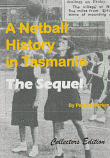
A Netball History in Tasmania - The Sequel, Collector's Edition
A further history of the sport of netball in Tasmania.
Our price: AUD 19.95
Market price: AUD 41.99
save 52%
including GST
10.00
% (
AUD 1.81
)
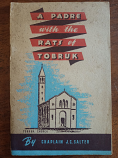
A Padre with the Rats of Tobruk
Written by Chaplain J.C.Salter and published in 1946 in Moonah, Tasmania.
Our price: AUD 48.00
including GST
10.00
% (
AUD 4.36
)
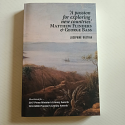
A Passion for Exploring New Countries
The young exploring lives of Matthew Flinders and George Bass.
Our price: AUD 43.99
including GST
10.00
% (
AUD 4.00
)
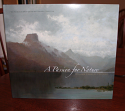
A Passion for Nature - William Charles Piguenit
William Charles Piguenit (1836-1914) was the first Australian -born professional landscape painter and the first Tasmanian-born artist. Piguenit's artistic output spanned a period of activity and development from the late 1860s to the beginning of the 20th century.
Our price: AUD 65.00
including GST
10.00
% (
AUD 5.91
)
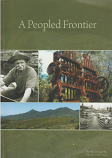
A Peopled Frontier - the European Heritage of the Tarkine Area
A Peopled Frontier documents the considerable history of human activity (European only) in the Tarkine region of north-west Tasmania which contains a large tract of temperate rainforest and is often described - erroneously, according to the author - as a wilderness.
Our price: AUD 45.00
including GST
10.00
% (
AUD 4.09
)