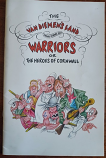
The Van Diemen's Land Warriors or The Heroes of Cornwall
An old 1827 Tasmanian satire reproduced in 2000 by Red Neck Comics with text by Barry Jessup with illustrations by Simon Barnard.
Our price: AUD 16.50
including GST
10.00
% (
AUD 1.50
)
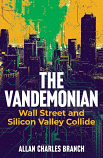
The Vandemonian
Wall Street and Silicon Valley collide - a Tasmanian memoir.
Our price: AUD 32.99
including GST
10.00
% (
AUD 3.00
)
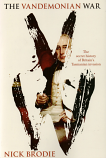
The Vandemonian War - secret history of Britain's Tasmanian Invasion
The Vandemonian War tells the secret history of Britain's Tasmanian invasion to create the Van Diemen's Land settlement.
Our price: AUD 32.00
including GST
10.00
% (
AUD 2.91
)
![The Vanishing Wild – Australian Wildlife and the Fight Against Extinction | Justine Hausheer | 2026 [NEW – SC]](https://onlinestore.bookcellar.com.au/images/T/vanishing-wild-Hbfn6d.png "The Vanishing Wild – Australian Wildlife and the Fight Against Extinction | Justine Hausheer | 2026 [NEW – SC]")
The Vanishing Wild – Australian Wildlife and the Fight Against Extinction | Justine Hausheer | 2026 [NEW – SC]
Australia has lost more biodiversity than any other developed nation in the last 200 years. Justine Hausheer's 2026 book documents what is being lost and what is being done to prevent further extinctions.
Our price: AUD 35.00
including GST
10.00
% (
AUD 3.18
)
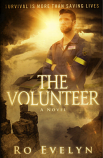
The Volunteer
Set in a remote Tasmanian seaside town, an outsider who volunteers on the local ambulance discovers strange goings on after a terrifying accident during a call out.
Our price: AUD 19.95
including GST
10.00
% (
AUD 1.81
)
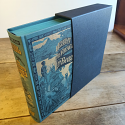
The Voyage of H.M.S. Beagle (Charles Darwin) - Folio Society 2006 (Used)
This Folio Society volume presents Charles Darwin's historic journal of research into the natural history and geology of the countries visited during his five-year voyage aboard HMS Beagle. Spanning his critical field observations from South America to the Galápagos Islands, this foundational text stands as both a magnificent travel memoir and a masterpiece of scientific literature.
Our price: AUD 85.00
including GST
10.00
% (
AUD 7.73
)
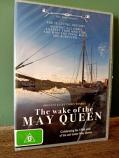
The Wake of the May Queen DVD
A documentary DVD hosted by Chris Wisbey celebrating the 150th year of the Tasmanian-built sail trader May Queen.
Our price: AUD 29.95
including GST
10.00
% (
AUD 2.72
)
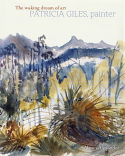
The Waking Dream of Art - Patricia Giles, painter
A biography of Tasmanian artist Patricia Giles, who has had a career as an artist spanning six decades, painting en plein air through the challenging weather of Tasmania.
Our price: AUD 75.00
including GST
10.00
% (
AUD 6.82
)
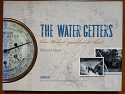
The Water Getters
The history of a Tasmanian city's drinking water supply - how Hobart quenched its thirst.
Our price: AUD 45.00
including GST
10.00
% (
AUD 4.09
)
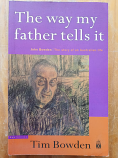
The Way My Father Tells It
The story of an Australian life, that of John Bowden told by his son renowned journalist Tim Bowden.
Our price: AUD 15.00
including GST
10.00
% (
AUD 1.36
)