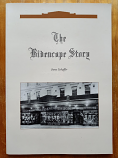
The Bidencope Story
A history of J.Bidencope & Sons, a family drapery firm in Hobart.
Our price: AUD 24.00
including GST
10.00
% (
AUD 2.18
)
The Big Rort
A novel of the Tasmanian Private Investigation Agency, by Barry Weston.
Our price: AUD 22.50
including GST
10.00
% (
AUD 2.05
)
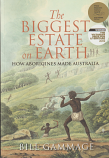
The Biggest Estate on Earth - used
Bill Gammage explodes the myth that pre-settlement Australia was an untamed wilderness revealing the complex, country-wide systems of land management used by Aboriginal people. This is a USED book.
Our price: AUD 28.00
including GST
10.00
% (
AUD 2.55
)
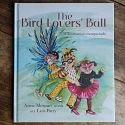
The Bird Lovers’ Ball
A Tasmanian masquerade - a brightly coloured, illustrated story book for young children.
Our price: AUD 29.99
including GST
10.00
% (
AUD 2.73
)
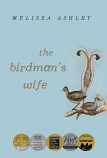
The Birdman's Wife - used
A woman overshadowed by history steps back into the light. Artist Elizabeth Gould spent her life capturing the sublime beauty of birds the world had never seen before, but her legacy was eclipsed by the fame of her husband, John Gould.
Our price: AUD 9.50
including GST
10.00
% (
AUD 0.86
)
![The Black War – Fear, Sex and Resistance in Tasmania | Nicholas Clements | 2014 [SC]](https://onlinestore.bookcellar.com.au/images/T/black-war-5Io7Zy.png "The Black War – Fear, Sex and Resistance in Tasmania | Nicholas Clements | 2014 [SC]")
The Black War – Fear, Sex and Resistance in Tasmania | Nicholas Clements | 2014 [SC]
Between 1825 and 1831, close to 200 British colonists and around 1,000 Aboriginal Tasmanians died violently in what became known as the Black War — the most intense and sustained frontier conflict in Australian history. Nicholas Clements takes a different approach to this history from most accounts.
Our price: AUD 35.95
including GST
10.00
% (
AUD 3.27
)
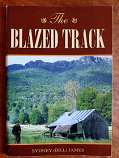
The Blazed Track
The Blazed Track is a book of local Tasmanian and family history telling of times in and around Lee's Paddocks and Mole Creek, and with the Lee family, the Walters and Mill Gang.
Our price: AUD 45.00
including GST
10.00
% (
AUD 4.09
)
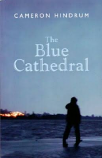
The Blue Cathedral
A Tasmanian novella, set around the mining and wilderness areas of Queenstown and Mt Lyell.
Our price: AUD 24.95
including GST
10.00
% (
AUD 2.27
)
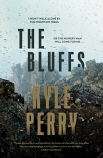
The Bluffs - used
When a school group of teenage girls goes missing in the remote wilderness of Tasmania's Great Western Tiers, the people of Limestone Creek are immediately on alert.
Our price: AUD 14.50
including GST
10.00
% (
AUD 1.32
)
![The Blythe Star Tragedy - how indifference and negligence sank a ship and cost three men their lives | Michael Stoddart | 2022 [USED – SC]](https://onlinestore.bookcellar.com.au/images/T/blythe-star-tragedy-twKh3s.png "The Blythe Star Tragedy - how indifference and negligence sank a ship and cost three men their lives | Michael Stoddart | 2022 [USED – SC]")
The Blythe Star Tragedy - how indifference and negligence sank a ship and cost three men their lives | Michael Stoddart | 2022 [USED – SC]
On 12 October 1973 the Blythe Star left Hobart for King Island with a cargo of fertiliser and beer. Fourteen hours later it sank without warning. Its crew of ten made it into a life raft, destined to drift for eight days around southern Tasmania.
Our price: AUD 45.00
including GST
10.00
% (
AUD 4.09
)