![Ten Rogues – Convict Schemers, a Stolen Brig and an Escape from Van Diemen's Land | Peter Grose | 2020 [SC]](https://onlinestore.bookcellar.com.au/images/T/ten-rogues-y1TrFY.png "Ten Rogues – Convict Schemers, a Stolen Brig and an Escape from Van Diemen's Land | Peter Grose | 2020 [SC]")
The true story of ten convicts who escaped from Sarah Island — the Macquarie Harbour penal station on Tasmania's remote west coast, regarded as the most brutal of Van Diemen's Land's convict establishments — by stealing the brig they had helped to build, and sailing it across the Pacific Ocean to Chile without a map or a chronometer. The ringleader was Jimmy Porter, a resourceful and audacious schemer whose account of the escape became one of the most remarkable documents of the convict era.
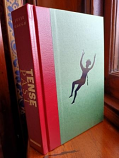
Tense Past documents Tasmanian Aboriginal artist Julie Gough's survey exhibition held at the Tasmanian Museum and Art Gallery (TMAG), Hobart, in 2019.
![Thanks a Lot, Guv! - eight convict stories, including Isaac "Ikey" Solomon, believed the real-life inspiration for Dickens' Fagin | T Garth Hyland | 2004 [USED – SC]](https://onlinestore.bookcellar.com.au/images/T/thanks-a-lot-gov-cHAlBG.png "Thanks a Lot, Guv! - eight convict stories, including Isaac \"Ikey\" Solomon, believed the real-life inspiration for Dickens' Fagin | T Garth Hyland | 2004 [USED – SC]")
The stories of eight convicts, from trial in England to detention and freedom in Van Diemen's Land: John Ireland Hyland and Harriet James, James Britton, Sophia and James Charles Gunyon, William Heard, and Isaac "Ikey" and Ann Solomon.
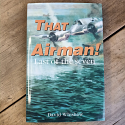
David Whishaw DFC's memoir of his RAAF service with No. 455 Squadron, flying Hampdens and later Beaufighters against enemy shipping off Norway. Hardcover with dustjacket, 1997, 140 pages.
![The 38th Battalion A.I.F. – The Story and Official History | Eric Fairey | 1920 | Facsimile Reprint [USED – SC – Very Good]](https://onlinestore.bookcellar.com.au/images/T/38th%20Battalion%20AIF-EAX2eG.png "The 38th Battalion A.I.F. – The Story and Official History | Eric Fairey | 1920 | Facsimile Reprint [USED – SC – Very Good]")
A facsimile reprint of the unit history of the 38th Battalion AIF, 10th Brigade, 3rd Division — a Victorian battalion raised at Bendigo in March 1916. Written by Eric Fairey and originally published by the Bendigo Advertiser in 1920, with a foreword by Prime Minister W.M. Hughes.