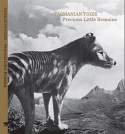
In Tasmanian Tiger: Precious Little Remains, the reader is taken on a journey exploring the tragic consequences of European settlement on this unique and misunderstood animal.
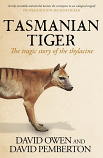
The tragic story of how ignorance, fear and lack of caring led to the extinction of the Tasmanian tiger or thylacine.
![Tasmanian Tiger – A Lesson to Be Learnt | Dr Eric Guiler & Philippe Godard | 1998 [Signed HCDJ Out of Print]](https://onlinestore.bookcellar.com.au/images/T/tasmanian-tiger-lesson-to-be-learnt-K3pgfX.png "Tasmanian Tiger – A Lesson to Be Learnt | Dr Eric Guiler & Philippe Godard | 1998 [Signed HCDJ Out of Print]")
An illustrated reference on the thylacine, written by Dr Eric Guiler and Philippe Godard and published in 1998. The book moves through the species' anatomy and earliest traces, its last stronghold in Tasmania, the first eyewitness accounts, its depiction by early artists, the bounty-hunting era that drove it to extinction, its life in captivity, and the searches and expeditions mounted since.
![Tasmanian Tiger – Alive & Well | Ned Terry | 2005 | Signed by Author with Handwritten Letter [USED – SC – Out of Print]](https://onlinestore.bookcellar.com.au/images/T/tasmanian-tiger-alive-and-well-jsGoxd.png "Tasmanian Tiger – Alive & Well | Ned Terry | 2005 | Signed by Author with Handwritten Letter [USED – SC – Out of Print]")
Ned Terry's collection of accounts from people who told him they had seen a thylacine — stories gathered from across Tasmania from people who believed the Tasmanian tiger had survived beyond its official extinction date of 1936. Terry spent years collecting these accounts and this book brings them together, illustrated with black and white photographs throughout.
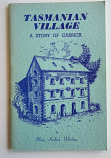
Carrick is one of northern Tasmania's most historic villages, its identity long bound up with the Old Carrick Mill on the banks of the Liffey River. In this slim, locally produced vintage booklet, Mary Kinloch Whishaw traces the story of the settlement.
![Tasmanian Visions - the definitive study of Tasmania's landscape in writing, art and photography | Roslynn D. Haynes | 2006 [USED – HC]](https://onlinestore.bookcellar.com.au/images/T/tasmanian-visions-A7bylh.png "Tasmanian Visions - the definitive study of Tasmania's landscape in writing, art and photography | Roslynn D. Haynes | 2006 [USED – HC]")
A comprehensive study of how the Tasmanian landscape has been seen and represented — through history, fiction, art, film and the accounts of travellers — by Roslynn Haynes, a Fellow of the Australian Academy of the Humanities and author of around ten books spanning literature, art and science. Still widely cited today in academic scholarship, the book traces themes from early colonial "picturesque" landscape painting through to the "Tasmanian Gothic" of prison narratives and contemporary film.