- per page

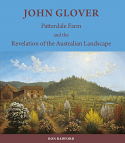
Colonial artist John Glover's Patterdale Farm and the revelation of the Australian landscape in northern Tasmania.
A facsimile of John Glover's sketchbook no.97 1832-34 produced in conjunction with the Tasmanian Museum and Art Gallery 2003 national touring exhibition entitled John Glover and the Colonial Picturesque.

The catalogue produced to accompany the major 2003 Tasmanian Museum and Art Gallery exhibition on John Glover — the English landscape painter who emigrated to Tasmania in 1831 at the age of 63 and spent the last eighteen years of his life painting the Tasmanian landscape at his property Patterdale near Evandale. Glover arrived in Van Diemen's Land having already established a considerable reputation as a landscape painter in Britain, where he had exhibited at the Royal Academy.
John Lee Archer (1791–1852) was Van Diemen's Land's first Colonial Architect and Civil Engineer, serving from 1827 to 1838 and responsible for virtually all government-commissioned buildings during that period. His works include Hobart's Parliament House (originally the Customs House), the Treasury and Ordnance Stores buildings, several buildings at Anglesea Barracks, numerous churches across the colony, the Low Head and Cape Bruny lighthouses, the Bridgewater Causeway and the Ross Bridge.
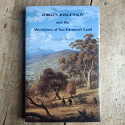
A reconstruction of Jorgen Jorgenson's 'lost' book on Tasmanian aboriginal customs and habits, and on his role in Van Diemen's Land roving parties and the Black Line.
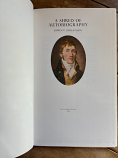
Jorgen Jorgenson (1780–1841) was a Danish-born adventurer who briefly ruled Iceland as a self-appointed administrator in 1809, earning him the nickname 'the Convict King'. Transported to Van Diemen's Land in 1826, he worked there as an explorer, constable — including in parties sent against Tasmanian Aboriginal people — and newspaper editor, before receiving a full pardon in 1835.
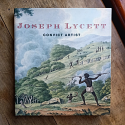
Joseph Lycett (c.1774–1828), twice convicted of forgery in England, was transported to Sydney in 1814. After a second forgery conviction in 1815, he was sent to the harsh Newcastle penal settlement — until Commandant Captain James Wallis recognised his talent and set him to painting the district's landscapes and its Aboriginal people instead of labouring in the coal mines.

A single-volume showcase of Peter Dombrovskis's wilderness photography, with introduction and commentary by Bob Brown, published in 2017. Dombrovskis spent his life photographing Tasmania's wild places, and his photograph "Morning Mist, Rock Island Bend" became one of the defining images of the Franklin River campaign — used in the 1983 federal election and widely credited with helping turn public opinion against the Franklin Dam.