Simon Cubit's history of the Lee family and their work as snarers and cattlemen in the Mersey High Country — the remote high country of Tasmania's Central Plateau above the Mersey Valley, centred on Lees' Paddocks near the headwaters of the Mersey River. The Lee family spent generations working this remote country — running cattle on the high plateau in summer, snaring possums through the colder months, and living a way of life that has since largely disappeared.
What we do to the soil, we do to ourselves. If we want our food to nourish us, and to ensure our planet's long-term health, we need to understand how soil works - how it's made, how it's lost, and how it can be repaired.
VVHickman OBE was Professor of Biology at the University of Tasmania 1943-1959, and became recognised as Australia's leading arachnologist. He personally described numerous Tasmanian spider species, including the Tasmanian funnel-web spider, and was honoured with an entire genus and family named after him — Hickmania and Hickmaniidae, the Tasmanian cave spider. This guide introduces Tasmania's common spiders through his own photographs and detailed drawings.
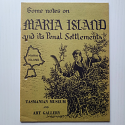
Maria Island, off Tasmania's east coast, operated as a convict penal settlement from 1825 to 1832 — established to ease overcrowding at Hobart — before closing due to frequent escapes and reopening as a probation station from 1842 to 1850. Darlington, at the island's north, is today regarded as the most intact surviving example of a convict probation station in Australia, and is UNESCO World Heritage-listed as part of the Australian Convict Sites.
A beautiful facsimile edition of Louisa Anne Meredith's Bush Friends of Tasmania original published in 1860 with the 2nd volume following some 31 years later.
Ralph Gowlland captures interesting aspects of Tasmanian history including: Bird Island Wreck Reef guano - Mason Pew - George III tragedy oatmeal and cocoa - Long Marsh Dam - Moore on the Pieman affair - Oatland Gaolkeeper - lead mine in northern Tasmania - Marsh Farm - overcrowded graveyards.
Nanette Sharman's sequel history of Sulphur Creek — the small coastal community on Tasmania's north-west coast between Burnie and Penguin, known historically as Lingtown.

![Snarers and Cattlemen of the Mersey High Country – The Lees of Lees' Paddocks | Simon Cubit | [USED – SC – Out of Print]](https://onlinestore.bookcellar.com.au/images/T/snarers-and-cattlemen-gzOdAR.png "Snarers and Cattlemen of the Mersey High Country – The Lees of Lees' Paddocks | Simon Cubit | [USED – SC – Out of Print]")


![Some Common Spiders of Tasmania - Vernon V Hickman OBE, Australia's leading arachnologist | 1967 [USED – SC]](https://onlinestore.bookcellar.com.au/images/T/some-common-spiders-of-tasmania-WI4Pr4.png "Some Common Spiders of Tasmania - Vernon V Hickman OBE, Australia's leading arachnologist | 1967 [USED – SC]")

![Something about Lingtown – A Sequel: More About Sulphur Creek | Nanette Sharman | 2011 [USED – SC – Out of Print]](https://onlinestore.bookcellar.com.au/images/T/something-about-lingtown-aQ1VpF.png "Something about Lingtown – A Sequel: More About Sulphur Creek | Nanette Sharman | 2011 [USED – SC – Out of Print]")