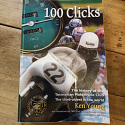
The Tasmanian Motorcycle Club was formed in Launceston in 1905 as the Tasmanian Automobile Club, and has run continuously ever since. Author Ken Young, a club life member and its history officer, researched the club's full history for this book, and believes it to be the third-oldest such club in the world.
![100 Hobart Houses 1901-2000 - out of print, one house story for each year of the 20th century | Miranda Morris & Jan Dallas | 2001 [USED – SC – Out of Print]](https://onlinestore.bookcellar.com.au/images/T/100-hobart-houses-DF5QGy.png "100 Hobart Houses 1901-2000 - out of print, one house story for each year of the 20th century | Miranda Morris & Jan Dallas | 2001 [USED – SC – Out of Print]")
Every house has a story. 100 Hobart Houses tells a hundred stories, one for each year of the 20th century, published by Hobart City Council. Co-author Miranda Morris is an established Tasmanian heritage architecture researcher, also behind Launceston's Industrial Heritage and Tamar Valley Industrial Heritage.
Note that this title has been replaced by Top Walks in Tasmania.
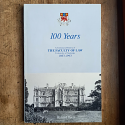
Richard Davis's centenary history of the Faculty of Law at the University of Tasmania, founded in 1893. Softcover, 98 pages, illustrated, used.
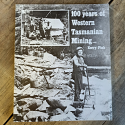
100 Years of Western Tasmanian Mining traces a century of mining on the west coast — from the district's earliest mineral discoveries, including tin at Mount Bischoff in 1871, silver-lead around Zeehan and Dundas in 1882, and the Mount Lyell copper field in 1883, through to the mining industry of the mid-1970s.
![101 Collective Nouns | Jennifer Cossins | 2017 [NEW – SC – Ages 4+]](https://onlinestore.bookcellar.com.au/images/T/101-collective-nouns-6gPzSA.png "101 Collective Nouns | Jennifer Cossins | 2017 [NEW – SC – Ages 4+]")
Jennifer Cossins's illustrated picture book of 101 collective nouns — a murder of crows, a wisdom of wombats, a smack of jellyfish — each paired with a full-colour animal illustration. Cossins is a Tasmanian illustrator and author whose work has attracted attention well beyond Tasmania.
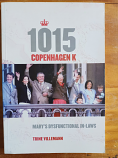
Written by European royal correspondent Trine Villemann, this publication provides a contemporary journalistic account of the modern Danish Royal House. The text chronicles the court's history leading up to the marriage of Tasmanian-born Mary Donaldson to Crown Prince Frederik, offering an independent perspective on the transition from a traditional constitutional monarchy into a modern royal family.
A history of the 111th Australian General Hospital (111AGH) established at Merton Vale, near Campbell Town Tasmania during World War II.