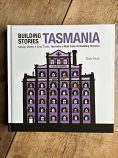
Building Stories Tasmania is an illustrated tour of Tasmania's most distinctive buildings - working waterfronts, former hydro sites, pubs, bookshops, hotels, theatres and small-town main streets - told through the people who built, worked and lived in them: convicts, clergy, brewers, booksellers and activists.
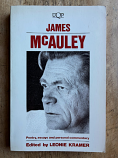
This volume brings together James McAuley's poetry, critical essays and personal commentary, ranging from his childhood in NSW to his years in Tasmania.
Roberts, Stewart & Co traces its roots to 1865, when Henry Llewelyn Roberts, George Anthony Kemp and John William Abbott founded an auctioneering business in Tasmania, originally known as Kemp, Roberts and Co, selling farm produce, skins and hides.
Our price:AUD 32.00
including GST
10.00
% (
AUD 2.91
)
OUT of PRINT
Tasmanian titles no longer available new, sourced as quality used copies. If a book you're after isn't in stock, check back — we regularly source out-of-print titles.
Veils and Tin Hats captures the history of the more than 200 Tasmanian nurses enlisted in Australian and British military forces during the Second World War.
Kathy Gatenby's biography of Viv and Hilda Robey, whose family farmed the southern end of Maria Island until it became a national park in 1971 - one of the island's last farming families.
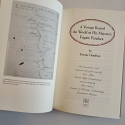
A facsimile of George Hamilton's 1793 account of the voyage of HMS Pandora — the Royal Navy frigate sent to arrest the Bounty mutineers in the South Seas. Hamilton was the ship's surgeon and the only eyewitness to publish a full contemporary account of the voyage.
Frank Styant Browne and Joshua Higgs Jnr shared two caravan holidays around Tasmania, in the summer of 1896 and the autumn of 1899 — one through north eastern Tasmania, the other to the westward through Deloraine. Browne recorded their travels in notebooks and photographed the towns and people they met; Higgs illustrated the same scenes in his own sketches.
Pam Wood's historical novel based on the life of Henry Gardiner — the first European ferryman on the Arthur River in Tasmania's northwest wilderness, who operated the crossing from 1878 to 1913. Gardiner was born in London in 1834 and came to Tasmania's developing colony, eventually taking the ferryman's role on the remote Arthur River in the Tarkine — one of the most isolated positions in the colony.
A Tasmanian geologist, describes 65 walks across southern Tasmania, from Mt Wellington and the Wellington Range through to the Tasman Peninsula. Each walk pairs track notes with the history — and at times the contested land-use issues — connected to the place.