- per page

![Memorandum and Articles of Association of Allan Stewart Limited (1916) [Annotated 1921 Legal Working Copy]](https://onlinestore.bookcellar.com.au/images/T/memorandum-allan-stewart-cover-IjbkBF.png "Memorandum and Articles of Association of Allan Stewart Limited (1916) [Annotated 1921 Legal Working Copy]")
A scarce original 1916 corporate legal pamphlet outlining the founding regulations of the prominent Launceston-based woolbrokers and stock agents, Allan Stewart Limited.
![On the Mountain (1996) – Peter Dombrovskis, Richard Flanagan, & Jamie Kirkpatrick [Limited Hardcover Edition]](https://onlinestore.bookcellar.com.au/images/T/on-the-mountain-hardcoverdustjacket-r4jIId.png "On the Mountain (1996) – Peter Dombrovskis, Richard Flanagan, & Jamie Kirkpatrick [Limited Hardcover Edition]")
A rare and highly collectible multi-disciplinary study of Hobart's iconic mountain, kunanyi / Mount Wellington.
![On the Mountain (1996) – Peter Dombrovskis, Richard Flanagan, & Jamie Kirkpatrick [Softcover]](https://onlinestore.bookcellar.com.au/images/T/on-the-mountain-softcover-2XaxYW.png "On the Mountain (1996) – Peter Dombrovskis, Richard Flanagan, & Jamie Kirkpatrick [Softcover]")
A highly sought-after multi-disciplinary study of Hobart's iconic mountain, kunanyi / Mount Wellington. Published in 1996 by West Wind Press, this volume explores the mountain through three distinct, powerful lens: an evocative literary essay by Booker Prize-winning Tasmanian author Richard Flanagan, 50 vibrant landscape photographs by legendary wilderness photographer Peter Dombrovskis, and a detailed ecological natural history survey by Professor Jamie Kirkpatrick.
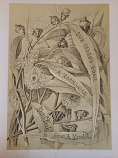
P.E. de Strzelecki, a Polish-born explorer and geologist, spent 1839–1843 surveying large parts of New South Wales, Gippsland and Van Diemen's Land on foot, during which he identified and named Mount Kosciuszko, Australia's highest peak. This book compiles the results of that survey — mineral assays, soil analyses and geological mapping — accompanied by a fold-out geological map, sections and diagrams, and figures of organic remains.
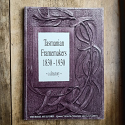
Therese Mulford's QVMAG-published directory of Tasmanian picture framemakers working between 1830 and 1930, including a chronological listing, convict-made frames, and framemakers linked to known Tasmanian artists.
![Tasmanian Friends and Foes Feathered, Furred and Finned | Louisa Anne Meredith | 1880 Edition [ANTIQUARIAN – HC]](https://onlinestore.bookcellar.com.au/images/T/tasmanian-friends-and-foes-A9qeE6.png "Tasmanian Friends and Foes Feathered, Furred and Finned | Louisa Anne Meredith | 1880 Edition [ANTIQUARIAN – HC]")
An 1880 edition of one of Louisa Anne Meredith's best-known works on Tasmanian natural history and colonial life. Meredith — who lived at Cambria near Swansea on the East Coast for much of her life — was one of the most prolific writers and illustrators of colonial Tasmania, and her natural history books are among the most vivid first-hand accounts of the island's wildlife and rural life in the 19th century.
![Tasmanians in the Transvaal War - including photographs of individual soldiers | John Bufton | First Edition 1905, S.G. Loone [USED – HC – Rare]](https://onlinestore.bookcellar.com.au/images/T/tasmanians-in-the-transvaal-sWgpJL.png "Tasmanians in the Transvaal War - including photographs of individual soldiers | John Bufton | First Edition 1905, S.G. Loone [USED – HC – Rare]")
John Bufton's account of Tasmania's contribution to the Second Boer War (1899–1902) in South Africa — referred to here by the contemporary term "Transvaal War," not to be confused with the earlier First Boer War of 1880–81.
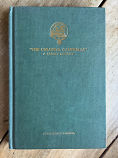
The Colonial Campbells is Colin McDowall Campbell's family history of an early Scots Campbell family in colonial Tasmania.
- per page