- per page

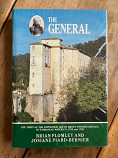
The General - Bruny d'Entrecasteaux Expedition to Tasmanian Waters in 1792, 1793 - Josiane Piard-Bernier & Brian Plomley
The General examines the two visits Bruny d'Entrecasteaux's expedition made to Tasmanian waters, in the autumn of 1792 and the summer of 1793, as part of France's 1791 mission to the Western Pacific to search for the missing explorer La Pérouse and carry out a wider programme of scientific work.
Our price: AUD 125.00
including GST
10.00
% (
AUD 11.36
)
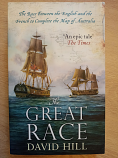
The Great Race - used
The race between Frenchman Nicolas Baudin and Englishman Matthew Flinders to chart the map of Australia. USED.
Our price: AUD 12.50
including GST
10.00
% (
AUD 1.14
)
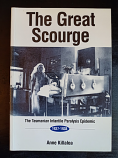
The Great Scourge
The Great Scourge tells the history of the infantile paralysis or polio epidemic 1937-1938 in Tasmania.
Our price: AUD 28.00
including GST
10.00
% (
AUD 2.55
)
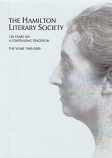
The Hamilton Literary Society 120 Years On
A history of Tasmania's Hamilton Literary Society from 1990 to 2009.
Our price: AUD 18.50
including GST
10.00
% (
AUD 1.68
)
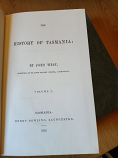
The History of Tasmania - John West
A 2-volume 1966 facsimile edition of John West's History of Tasmania, originally published in 1852.
Our price: AUD 95.00
including GST
10.00
% (
AUD 8.64
)
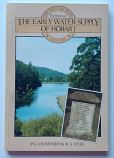
The History of the Early Water Supply of Hobart - the first 100 years 1804-1904
The History of the Early Water Supply of Hobart traces the engineering story of the city's water from 1804 to 1904.
Our price: AUD 35.00
including GST
10.00
% (
AUD 3.18
)
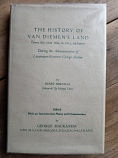
The History of Van Diemen's Land
The History of Van Diemen's Land from the year 1824 to 1835 inclusive during the administration of Lieutenant-Governor George Arthur by Henry Melville, this edition edited with commentary and introduction by George Mackaness.
Our price: AUD 55.00
including GST
10.00
% (
AUD 5.00
)
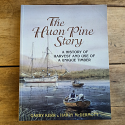
The Huon Pine Story - Garry Kerr - Tasmanian Timber History
An extensively researched, definitive history detailing the rugged harvest, river trade, and practical utilization of Huon pine—the iconic timber unique to the wild rivers and rainforests of western Tasmania.
Looking for the clothbound hardback library edition? View our Hardcover Edition of The Huon Pine Story here.
Our price: AUD 35.00
including GST
10.00
% (
AUD 3.18
)
The Journal of Charles O'Hara Booth
The Journal of Charles O'Hara Booth, Commandant of the Port Arthur Penal Settlement. This is an out-of-print book in USED condition.
Our price: AUD 55.00
including GST
10.00
% (
AUD 5.00
)
The Killing at Risdon Cove
A re-examination of the much written about but little documented aboriginal massacre at Risdon Cove in 1804.
Our price: AUD 34.95
including GST
10.00
% (
AUD 3.18
)
- per page