- per page

![The Companion to Tasmanian History | Alison Alexander (Ed.) | 2005 [USED – HCDJ – Out of Print]](https://onlinestore.bookcellar.com.au/images/T/companion-to-tasmanian-history-HATP7j.png "The Companion to Tasmanian History | Alison Alexander (Ed.) | 2005 [USED – HCDJ – Out of Print]")
A comprehensive single-volume reference to Tasmanian history, edited by Alison Alexander and published by the Centre for Tasmanian Historical Studies at the University of Tasmania in 2005. With over 1073 articles covering everything from Aboriginal art to zoos, and every district from Adamsfield to Zeehan, this is the most thorough single-volume reference on Tasmania's history available.
![The Convicts' Good Parson – The Reverend George Eastman in Van Diemen's Land 1844–1870 | Terence George Eastman & Pamela Tyson | 2019 [NEW – SC]](https://onlinestore.bookcellar.com.au/images/T/Convict%27s-Good-Parson-VtriPv.png "The Convicts' Good Parson – The Reverend George Eastman in Van Diemen's Land 1844–1870 | Terence George Eastman & Pamela Tyson | 2019 [NEW – SC]")
The biography of the Reverend George Eastman — a Church of England clergyman who served for 26 years in parishes across Van Diemen's Land during the final decades of the transportation era, and whose final posting was to Port Arthur. Eastman took an unfashionable view for his time: that convicts could be reformed, and that religious instruction, education and practical training were the means to achieve it.
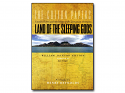
The Cotton Papers presents the writings and drawings of William Jackson Cotton, compiled and introduced by Jane Cooper, with a prologue by historian Henry Reynolds and notes by historian Nick Clements. The material is presented as Tasmanian Aboriginal mythology and history handed down through five generations of the Cotton family, who settled on Tasmania's East Coast in the 1820s.
![The Cyclopedia of Tasmania 1931 – An Historical, Industrial and Commercial Review Including Biographical Facts | Service Publishing Co. | 1931 [USED – HC – Good]](https://onlinestore.bookcellar.com.au/images/T/cyclopedia-of-tasmania-1931-79BZSn.png "The Cyclopedia of Tasmania 1931 – An Historical, Industrial and Commercial Review Including Biographical Facts | Service Publishing Co. | 1931 [USED – HC – Good]")
The 1931 Tasmanian Cyclopedia — an historical, industrial and commercial review of Tasmania at that date, including hundreds of biographical entries on the people of Tasmania and thousands of illustrations. Cyclopedias of this kind were produced for most Australian states in the early 20th century and are among the most useful primary sources for Tasmanian family and local history research — documenting not just prominent figures but ordinary citizens, businesses, towns and industries at a specific moment in time.
The Cyclopedias published for most Australian states around the turn of the 20th century are major resources for historical and biographical research — and this is the original Tasmanian volume. Together, the two volumes contain over 1,500 biographies and more than 1,700 portrait photographs, covering not only the prominent citizens of the day but a large proportion of ordinary Tasmanians in every community — tradespeople, farmers, shopkeepers and professionals alongside politicians and businessmen.
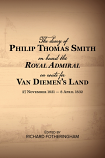
The complete diary of the Reverend Robert Knopwood — the first chaplain of Van Diemen's Land, who arrived with the founding party of European settlers in 1803 and remained in the colony until his death in 1838. Knopwood kept a diary continuously from the moment of his arrival until near the end of his life — 35 years of daily observation.
![The Diary of the Reverend Robert Knopwood 1803–1838 – First Chaplain of Van Diemen's Land | Mary Nicholls (Ed.) | 1977 [USED – HCDJ – Out of Print]](https://onlinestore.bookcellar.com.au/images/T/diary-reverend-robert-knopwood-hcdj-JVzdJJ.png "The Diary of the Reverend Robert Knopwood 1803–1838 – First Chaplain of Van Diemen's Land | Mary Nicholls (Ed.) | 1977 [USED – HCDJ – Out of Print]")
The complete diary of the Reverend Robert Knopwood — the first chaplain of Van Diemen's Land, who arrived with the founding party of European settlers in 1803 and remained in the colony until his death in 1838. Knopwood kept a diary continuously from the moment of his arrival until near the end of his life — 35 years of daily observation.
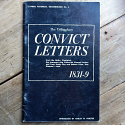
This relatively scarce historical booklet compiles the original correspondence of William Dillingham, documenting his experiences from the prison hulks at Woolwich, his voyage aboard the transport ship Catherine Stewart Forbes, and his subsequent assignment in Sandy Bay and Hobart Town, Van Diemen's Land, between 1831 and 1839.
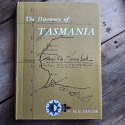
All the main discoveries of Tasmania from Tasman in 1642 to Baudin in 1804.
- per page