- per page

![Persistence Pays – The Discovery of Dr William Russ Pugh's Log and Journal of His 1835 Voyage from England to New Holland | John Paull (Ed.) | 2017 | Hardcover Limited Edition 54/150 [USED – HC – Very Good]](https://onlinestore.bookcellar.com.au/images/T/persistence-pays-hardcover-O8QxkK.png "Persistence Pays – The Discovery of Dr William Russ Pugh's Log and Journal of His 1835 Voyage from England to New Holland | John Paull (Ed.) | 2017 | Hardcover Limited Edition 54/150 [USED – HC – Very Good]")
The log and journal kept by Dr William Russ Pugh during his 1835 voyage from England to New Holland — transcribed, annotated and published by retired Launceston anaesthetist Dr John Paull in 2017. Pugh arrived in Hobart in December 1835 and walked north to Launceston, where he established a medical practice that would make history.
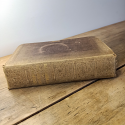
P.E. de Strzelecki, a Polish-born explorer and geologist, spent 1839–1843 surveying large parts of New South Wales, Gippsland and Van Diemen's Land on foot, during which he identified and named Mount Kosciuszko, Australia's highest peak. This book compiles the results of that survey — mineral assays, soil analyses and geological mapping — accompanied by a fold-out geological map, sections and diagrams, and figures of organic remains.
![Pictorial Portrayal of Tasmania's Past – From Beattie's Studio | Basil Rait | 1982 [USED – HCDJ – Good]](https://onlinestore.bookcellar.com.au/images/T/pictorial-portrayal-of-tasmanias-past-cEpTfy.png "Pictorial Portrayal of Tasmania's Past – From Beattie's Studio | Basil Rait | 1982 [USED – HCDJ – Good]")
A collection of historical photographs from the Beattie Studio in Hobart — J.W. Beattie's archive of Tasmania's past, selected and presented by Basil Rait. J.W. Beattie was Tasmania's most significant colonial-era photographer, whose studio documented the island's landscape, communities, industries and people across the late 19th and early 20th centuries.
![Prospecting the Pieman – George Campbell Meredith 1876–1877 | Alice Meredith Hodgson (Ed.) | 2009 [USED – SC]](https://onlinestore.bookcellar.com.au/images/T/prospecting-the-pieman-l6VqDv.png "Prospecting the Pieman – George Campbell Meredith 1876–1877 | Alice Meredith Hodgson (Ed.) | 2009 [USED – SC]")
For seventeen weeks over the summer of 1876–77, George Campbell Meredith and his brother Owen prospected and trekked through the remote country along the Pieman River on Tasmania's west coast — one of the least-known and most difficult pieces of terrain on the island.
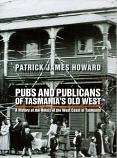
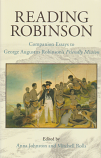
A collection of essays by Australian and international historians examining George Augustus Robinson's Friendly Mission — the journals Robinson kept during his time among the Aboriginal peoples of Van Diemen's Land from 1829 to 1834, edited by N.J.B. Plomley and republished in a second edition in 2008.

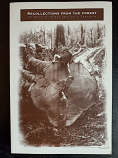
75 years of forest service in Tasmania.
- per page