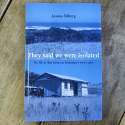
In 1974, twenty-year-old Joanna and her husband Peter set out to turn a remote, neglected property on Tasmania's wild west coast into a working cattle enterprise. Three hours' drive from the nearest town at the end of a rough, sandy track, Top Farm offered no plumbing, no telephone and no neighbours.
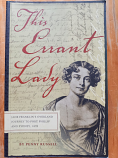
In 1839, Jane, Lady Franklin — wife of Tasmania's Lieutenant-Governor Sir John Franklin — did something almost no colonial woman of her time did: she set out from Hobart to Port Phillip, then overland from Melbourne to Sydney, travelling through country few Europeans had crossed.
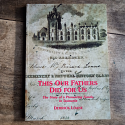
A revised history of the relationship between Indigenous Australians and early settlers, with a focus on those men and women who fought for justice for Indigenous people even when doing so left them isolated and criticised by their fellow whites.
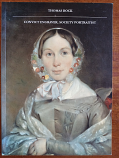
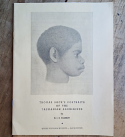
A scholarly paper by N.J.B. Plomley, a leading historian of Tasmanian Aboriginal historical sources, examining the portraits of Tasmanian Aboriginal people painted by Thomas Bock — a transported convict artist who went on to become a respected society portraitist in colonial Hobart.
This is the biography of Thomas Hainsworth, a coal miner who arrived in Tasmania from Yorkshire in 1854 and went on to become a mining / geology expert, educator, hospital founder and general pillar of society.