- per page


The Museum of Modern Love - used
This dazzlingly original novel asks beguiling questions about the nature of art, life and love and finds a way to answer them.
Our price: AUD 16.50
including GST
10.00
% (
AUD 1.50
)
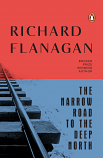
The Narrow Road to the Deep North
A story about the many forms of love and death, of war and truth, as one man comes of age, prospers, only to discover all that he has lost.
Our price: AUD 22.99
including GST
10.00
% (
AUD 2.09
)
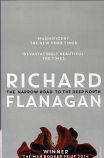
The Narrow Road to the Deep North - used
The Man Booker prize winning novel of love and despair set on the Thai-Burma railway.
Our price: AUD 12.50
including GST
10.00
% (
AUD 1.14
)
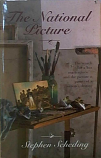
The National Picture - the search for a lost masterpiece
Author Stephen Scheding is an art researcher seeking Australia's missing masterpiece, Benjamin Duterrau's legendary The National Picture.
Our price: AUD 22.50
including GST
10.00
% (
AUD 2.05
)
![The National Trust in Tasmania | J.N.D. Harrison & Frank Bolt | 1977 [USED – HCDJ – Very Good]](https://onlinestore.bookcellar.com.au/images/T/national-trust-in-tasmania-brown-MQYdWf.png "The National Trust in Tasmania | J.N.D. Harrison & Frank Bolt | 1977 [USED – HCDJ – Very Good]")
The National Trust in Tasmania | J.N.D. Harrison & Frank Bolt | 1977 [USED – HCDJ – Very Good]
J.N.D. Harrison's survey of properties considered by the National Trust in Tasmania as historically significant — photographed throughout by Frank Bolt, who also produced Vanishing Tasmania. Published in 1977, the book documents the Trust's assessment of Tasmania's historic built heritage at that time — the properties the National Trust considered worthy of protection and preservation.
Our price: AUD 26.00
including GST
10.00
% (
AUD 2.36
)
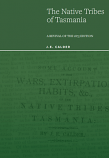
The Native Tribes of Tasmania
A revival of the 1875 edition of James Erskine Calder's book "Some Account of the Wars, Extirpation, Habits &C of the Native Tribes of Tasmania".
Our price: AUD 39.99
including GST
10.00
% (
AUD 3.64
)
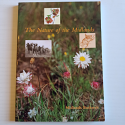
The Nature of the Midlands
A book about the natural environment of the Tasmanian midlands, compiled by Midlands Bushweb.
Our price: AUD 75.00
including GST
10.00
% (
AUD 6.82
)
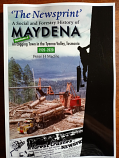
The Newsprint - a social & forestry history of Maydena, Tyenna Valley
A social and forestry history of Maydena, an experimental logging town in the Tyenna Valley, Tasmania 1920-2020.
Our price: AUD 59.95
including GST
10.00
% (
AUD 5.45
)
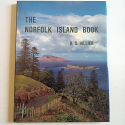
The Norfolk Island Book
A colour photographic portrayal of Norfolk Island.
Our price: AUD 22.50
including GST
10.00
% (
AUD 2.05
)
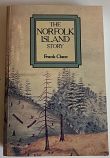
The Norfolk Island Story
A highly readable history of Norfolk Is by Frank Clune.
Our price: AUD 18.50
including GST
10.00
% (
AUD 1.68
)