- per page

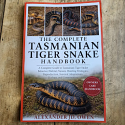
A complete guide to Tasmanian tiger snake behaviour, habitat, venom, hunting strategies, reproduction, survival adaptations, ecology, and conservation,
![The Convict and the Compass – The Untold Story of Irish Political Convict and Colonial Surveyor James Meehan | Peter Bradley | 2025 [NEW – HCDJ]](https://onlinestore.bookcellar.com.au/images/T/convict-and-the-compass-P6snPf.png "The Convict and the Compass – The Untold Story of Irish Political Convict and Colonial Surveyor James Meehan | Peter Bradley | 2025 [NEW – HCDJ]")
James Meehan was sentenced at 26 for his role in an uprising against British rule in Ireland and arrived in Australia in 1800 as a convict servant to English explorer Charles Grimes. Through talent and persistence he rose to become Acting Surveyor General of the New South Wales colony, working under five governors from 1800 to 1822.
![The Convict Days of Port Arthur – Illustrated with 19th Century Photographs by J.W. Beattie | 1990 [USED – SC – Good]](https://onlinestore.bookcellar.com.au/images/T/convict-days-of-port-arthur-yGXqxf.png "The Convict Days of Port Arthur – Illustrated with 19th Century Photographs by J.W. Beattie | 1990 [USED – SC – Good]")
A pictorial history of the convict era at Port Arthur — illustrated throughout with 19th century photographs from the Beattie Studio in Hobart. J.W. Beattie was Tasmania's most significant colonial-era photographer, whose studio documented the island's landscape, people and history across the late 19th century.
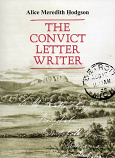
![The Convict Probation System – Van Diemen's Land 1839–1854 | Ian Brand & Michael Sprod | 1990 [USED – HCDJ – Good]](https://onlinestore.bookcellar.com.au/images/T/convict-probation-system-uf5fde.png "The Convict Probation System – Van Diemen's Land 1839–1854 | Ian Brand & Michael Sprod | 1990 [USED – HCDJ – Good]")
Ian Brand and Michael Sprod's history of the probation system — the major experiment in convict management that replaced the assignment system in Van Diemen's Land from 1839 and shaped the colony's labour system, landscape and penal administration for the following fifteen years.
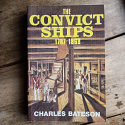
Charles Bateson reconstructs the voyages of the ships transporting convicts to Australia and also the administrative system under which the ships were selected, manned, provisioned and despatched with their miserable human freight to face a 13,000 mile voyage over tempestuous and largely uncharted seas.
The first theatrical performance in Australia — a 1788 convict staging of George Farquhar's play The Recruiting Officer at Sydney Cove, to mark King George III's birthday — later inspired Thomas Keneally's novel The Playmaker and Timberlake Wertenbaker's play Our Country's Good. Robert Jordan, Foundation spent years combing British and colonial newspapers, court records and logbooks to uncover the real story of Australia's first forty years of theatre — organised not by nostalgic soldiers and settlers, as long believed, but by convicts themselves.