- per page

![The 38th Battalion A.I.F. – The Story and Official History | Eric Fairey | 1920 | Facsimile Reprint [USED – SC – Very Good]](https://onlinestore.bookcellar.com.au/images/T/38th%20Battalion%20AIF-EAX2eG.png "The 38th Battalion A.I.F. – The Story and Official History | Eric Fairey | 1920 | Facsimile Reprint [USED – SC – Very Good]")
A facsimile reprint of the unit history of the 38th Battalion AIF, 10th Brigade, 3rd Division — a Victorian battalion raised at Bendigo in March 1916. Written by Eric Fairey and originally published by the Bendigo Advertiser in 1920, with a foreword by Prime Minister W.M. Hughes.
![The 52nd Battalion A.I.F. | Neville Browning | 2005 | Signed & Numbered Limited Edition [USED – HCDJ – Very Good]](https://onlinestore.bookcellar.com.au/images/T/52nd%20Battalion-ypDYUY.png "The 52nd Battalion A.I.F. | Neville Browning | 2005 | Signed & Numbered Limited Edition [USED – HCDJ – Very Good]")
The unit history of the 52nd Battalion A.I.F. in the First World War, written by Neville Browning and published in 2005. The 52nd Battalion was raised in South Australia and Western Australia in 1916 and served on the Western Front as part of the 13th Brigade, 4th Division AIF — seeing action at Polygon Wood, Passchendaele, Villers-Bretonneux and the Hundred Days Offensive of 1918.
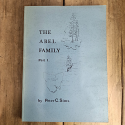
William Abel (1776–1850) was convicted in England and transported to Port Jackson, New South Wales, in 1791 at around 14 years old. Mary Ann Morley (c.1778–1856) was also transported to Port Jackson. Both were assigned to Norfolk Island, where they began their family, before being moved to New Norfolk in Van Diemen's Land, where they officially married in 1811 and received a land grant in 1813.
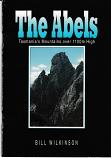
155 Tasmanian peaks make up the Abels — Tasmanian mountains with a minimum height of 1100m and a drop of at least 150m on all sides, as defined by Bill Wilkinson in his original Abels series. This compact reference supplement lists all 155 Abels, organised into 10 geographic areas across the state, with photographs and maps.
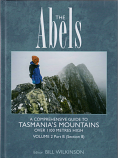
Bill Wilkinson's comprehensive guide to Tasmania's mountains over 1100 metres, Volume 2 Part B (Section 8), covering the state's west and south-west. Signed by the editor.
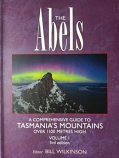
Signed by the author.
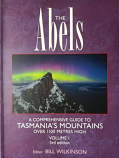
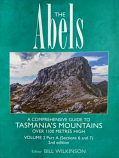
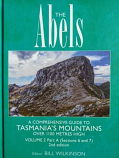
The hardcover edition of Bill Wilkinson's comprehensive guide to Tasmania's Abels — the mountains over 1100 metres high — Volume Two Part A, covering Sections 6 and 7. Section 6 covers the Western Arthur Range and the mountains of the far southwest. Section 7 covers the mountains of the Central Plateau and surrounding areas.
![The Aboriginal People of Tasmania | Julia Clark | 1993 [USED – SC – Out of Print]](https://onlinestore.bookcellar.com.au/images/T/aboriginal-people-of-tasmania-maroon-mkOZ9x.png "The Aboriginal People of Tasmania | Julia Clark | 1993 [USED – SC – Out of Print]")
Julia Clark's illustrated introduction to the history and culture of Tasmania's Aboriginal people — covering the earliest inhabitants of the island, their material culture, social life, and the catastrophic impact of European colonisation. At 56 pages with colour and black and white illustrations throughout, this is a concise and accessible overview suitable for older children, students and adults wanting a clear introductory account.