- per page


D.M. Wyatt OAM's history of the Launceston Regiment, from the initial formation of colonial volunteers in 1860 through a century of continuous lineage: colonial development to 1902, the Launceston Regiment and Infantry of 1903–1914, its contribution to the First World War, the interwar years, the 12th/50th Battalion of the Second World War (1939–1945), the formation of the 12th/40th Battalion in 1948, and on to the 12th Battalion (Launceston Regiment).


![Mapping Van Diemen's Land and the Great Beyond | Royal Society of Tasmania | [USED – HC – Very Good]](https://onlinestore.bookcellar.com.au/images/T/Mapping-VDL-N3ssJS.png "Mapping Van Diemen's Land and the Great Beyond | Royal Society of Tasmania | [USED – HC – Very Good]")
A collection of rare and significant maps from the Royal Society of Tasmania's collection — many of them little seen by the public — published to showcase the breadth and historical significance of the Society's cartographic holdings. The maps principally cover Van Diemen's Land from the earliest days of European contact and settlement, but the collection extends to areas "beyond".
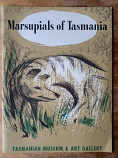
A vintage booklet about the marsupials of Tasmania that also includes the two monotremes: platypus and echidna.
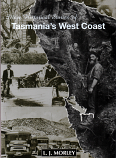
The companion volume to the popular regional series by respected Tasmanian transport and local historian L.J. (Les) Morley. An essential visual and narrative archive capturing the rugged pioneering grit of early West Coast mining towns, bush tracks, and local characters.
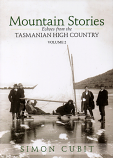
Mountain Stories: Echoes from the Tasmanian High Country (Volume 2) by Simon Cubit, available new, offers a collection of oral histories from the Western Tiers and Central Plateau. As a standalone volume that does not require reading the out-of-print first book, this 290-page softcover captures the lives of the mountain men and heritage huts.

![Next Stop, Ring Once – A Pictorial History of Trams and Trolley Buses in Tasmania | L.J. Morley | 2022 [NEW – SC]](https://onlinestore.bookcellar.com.au/images/T/next-stop-ring-once-baTKG1.png "Next Stop, Ring Once – A Pictorial History of Trams and Trolley Buses in Tasmania | L.J. Morley | 2022 [NEW – SC]")
Les Morley's pictorial history of trams and trolley buses in Tasmania — covering the systems that operated in Hobart, Launceston and other Tasmanian centres from the late 19th century through to the end of electric tram and trolleybus operation. Tasmania had a more extensive tram network than many Australians realise — Hobart's tramway system operated from 1893 to 1960, Launceston had its own network, and trolleybuses continued in Hobart into the 1960s.
- per page