Rees Campbell, author of the bestselling Eat MORE Wild Tasmanian, turns her attention to Tasmania's off-shore islands. There are some 6,500 islands, islets, rocks and reefs around the state, and this book visits 40 of them — from the largest, Flinders Island, to the remote and uninhabited Pedra Branca and Mewstone in the Southern Ocean, to some of the smallest and closest, like the Harbour Islets in the state's far North West.
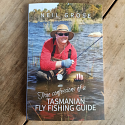
Neil Grose's collection of fishing yarns from his years as one of Tasmania's fly fishing guides and founder of Rainbow Lodge, Miena — stories rather than a how-to guide. Softcover, 2026, 185 pages.
A comprehensive modern compendium and personal memoir documenting the extraordinarily diverse birdlife of Lutruwita / Tasmania. Compiled by Els Wakefield, one of the state's most experienced lifelong birders, this heavy large-format volume acts as both a detailed reference work and a visual celebration of the island's avian fauna.
Our price:AUD 85.00
including GST
10.00
% (
AUD 7.73
)
Latest Releases
Our newest Tasmanian arrivals, updated as fresh stock comes in — worth checking back regularly if you're after the latest finds.
Parattah, in Tasmania's Southern Midlands, grew up as a railway town on the Main Line between Hobart and Launceston, which opened through the area in 1876. Confusingly, the station was originally named "Oatlands Station," since it was as close as the line came to the actual town of Oatlands, before being renamed Parattah in 1882.
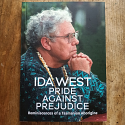
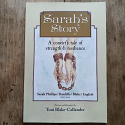
Ida West reminiscences of a Tasmanian Aborigine - a reprint of the first autobiography published by a Palawa person. Ida "Aunty Ida" West (1919–2003) was born on Cape Barren Island and moved to Flinders Island as a child. She spent much of her life advocating for the rights, land and health of the Tasmanian Aboriginal community.
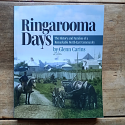
Ringarooma, in Tasmania's North-East, began as "Krushka Town," a private township founded in 1882 by the Krushka brothers, whose enterprise grew out of the region's tin mining boom of the 1870s. The town was renamed Ringarooma in 1888. Glenn Carins traces the history and pioneering families of the district, including Alberton, Krushka Town, Pinega, Talawa/Maurice and Trenah.
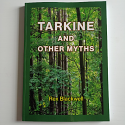
A book that describes what exists and what doesn't exist in Tasmania's Tarkine, as used by aboriginal people, or within the wider Tarkine definition used by the tourism industry. An area of great beauty despite its industrial and other uses over 150 years.
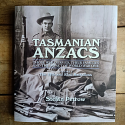
Those who served, their families and the impact of World War One volume I - the 12th and 52nd Battalions. Tasmanian ANZACS considers the unique contribution of Tasmanian soldiers in WWI and the pain endured by their grieving families.
One hundred places on the Tasmanian Heritage Register — and the stories of why they were built, who built them, and why they matter. Tasmania has more heritage-listed buildings per capita than any other Australian state, and the stories behind them are often as significant as the buildings themselves.
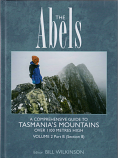
Bill Wilkinson's comprehensive guide to Tasmania's mountains over 1100 metres, Volume 2 Part B (Section 8), covering the state's west and south-west. Signed by the editor.
![Islands of the Island State - Rees Campbell explores 40 of Tasmania's 6,500 offshore islands, their history & wild food | 2026 [NEW – SC]](https://onlinestore.bookcellar.com.au/images/T/islands-of-the-island-state-tTnn8f.png "Islands of the Island State - Rees Campbell explores 40 of Tasmania's 6,500 offshore islands, their history & wild food | 2026 [NEW – SC]")
![A Life with the Birds of Tasmania – Els Wakefield (2026) [New Release Heavy Hardback Edition]](https://onlinestore.bookcellar.com.au/images/T/a-life-with-the-birds-9a5ArZ.png "A Life with the Birds of Tasmania – Els Wakefield (2026) [New Release Heavy Hardback Edition]")

![Parattah - Junction Town of the Southern Midlands, 150 Years of Railway History | Steven Figg | 2025 [NEW – SC]](https://onlinestore.bookcellar.com.au/images/T/parattah-ax5e4p.png "Parattah - Junction Town of the Southern Midlands, 150 Years of Railway History | Steven Figg | 2025 [NEW – SC]")
![Tasmanian Built – The Places and Stories of the Tasmanian Heritage Register | King, Torossi, Evans & Plapp | 2022 [NEW – Large SC]](https://onlinestore.bookcellar.com.au/images/T/tasmanian-built-YLns9Q.png "Tasmanian Built – The Places and Stories of the Tasmanian Heritage Register | King, Torossi, Evans & Plapp | 2022 [NEW – Large SC]")