- per page

![The King Billy Story – A History of the Harvesting of the Tasmanian King William Pine | Patrick Howard | 2023 [NEW – SC]](https://onlinestore.bookcellar.com.au/images/T/king-billy-story-rBLGrq.png "The King Billy Story – A History of the Harvesting of the Tasmanian King William Pine | Patrick Howard | 2023 [NEW – SC]")
Patrick Howard's history of the harvesting of the King William Pine — Athrotaxis selaginoides — one of Tasmania's most distinctive and ancient native conifers, endemic to the island's cool temperate rainforests and alpine areas, and historically one of its most prized timbers. King Billy pine grows slowly over centuries in some of Tasmania's most remote country — the west coast, the Tarkine, the highland lakes area and the south-west.
Little more than 70 years after the British settled Van Diemen's Land (later Tasmania) in 1803, the indigenous community had been virtually wiped out.
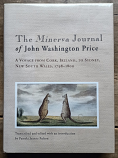
John Washington Price was just 21, and recently graduated from Dublin's College of Surgeons, when he sailed as ship's surgeon aboard the transport Minerva from Cork to Sydney in 1799, carrying 200 convicts. Many were United Irishmen transported for their role in the 1798 Rebellion, including the rebel leader General Joseph Holt.
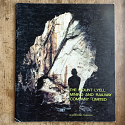
An updated corporate booklet giving an overview of the work and structure of The Mount Lyell Mining and Railway Company Limited Queenstown, Tamania.
![The National Trust in Tasmania | J.N.D. Harrison & Frank Bolt | 1977 [USED – HCDJ – Very Good]](https://onlinestore.bookcellar.com.au/images/T/national-trust-in-tasmania-brown-MQYdWf.png "The National Trust in Tasmania | J.N.D. Harrison & Frank Bolt | 1977 [USED – HCDJ – Very Good]")
J.N.D. Harrison's survey of properties considered by the National Trust in Tasmania as historically significant — photographed throughout by Frank Bolt, who also produced Vanishing Tasmania. Published in 1977, the book documents the Trust's assessment of Tasmania's historic built heritage at that time — the properties the National Trust considered worthy of protection and preservation.
![The Norfolk Settlers of Norfolk Island and Van Diemen's Land - Abel family & connections: Triffitt, Hay, Gill, Foster, Eddington, Hudson & more, signed & numbered 65/500 | Peter C Sims | 1987 [USED – HCDJ – worn/torn dustjacket, creased pages]](https://onlinestore.bookcellar.com.au/images/T/norfolk-settlers-uLgUcf.png "The Norfolk Settlers of Norfolk Island and Van Diemen's Land - Abel family & connections: Triffitt, Hay, Gill, Foster, Eddington, Hudson & more, signed & numbered 65/500 | Peter C Sims | 1987 [USED – HCDJ – worn/torn dustjacket, creased pages]")
Extensive family history of the Norfolk settlers of Norfolk Island and subsequently Van Diemen's Land including references to families Abel, Morey, Hibbins, Triffitt, Hay, Gill, Foster, Eddington, Clark, Blyth, Stephens, Richards, Hudson, Chesterman and Geard. Includes references to families Abel, Morey, Hibbins, Triffitt, Hay, Gill, Foster, Eddington, Clark, Blyth, Stephens, Richards, Hudson, Chesterman and Geard.
- per page
![To Hell or to Hobart – The Story of an Irish Convict Couple Transported to Tasmania in the 1840s | Patrick Howard | 1993 [HCDJ]](https://onlinestore.bookcellar.com.au/images/T.cache.tinythmbn/3538.png "To Hell or to Hobart – The Story of an Irish Convict Couple Transported to Tasmania in the 1840s | Patrick Howard | 1993 [HCDJ]")