
- per page

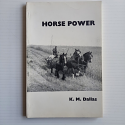
A 1968 study of horses in Tasmania - farm horses, coach horses, half-breds and horses in war - by University of Tasmania economic historian K.M. Dallas.

![In My Day – A History of General Nurse Training at the Royal Hobart Hospital 1803–1993 | Cheryl Norris | 2011 | Signed by Author [USED – SC – Out of Print]](https://onlinestore.bookcellar.com.au/images/T/in-my-day-s1LHz4.png "In My Day – A History of General Nurse Training at the Royal Hobart Hospital 1803–1993 | Cheryl Norris | 2011 | Signed by Author [USED – SC – Out of Print]")
A history of general nurse training at the Royal Hobart Hospital, spanning from the hospital's earliest colonial origins in 1803 through to 1993. The Royal Hobart Hospital's roots reach back to the earliest years of European settlement in Van Diemen's Land, and nurse training there evolved over almost two centuries from informal colonial-era care through to the structured professional training systems of the 20th century.

![In Tasmania | Nicholas Shakespeare | 2007 [SC]](https://onlinestore.bookcellar.com.au/images/T/in-tasmania-8Ds2s5.png "In Tasmania | Nicholas Shakespeare | 2007 [SC]")
Nicholas Shakespeare — novelist and biographer of Bruce Chatwin — came to Tasmania on holiday, found a house on an east coast beach near Swansea, and decided on the spot that this was where he wanted to live. He didn't yet know that his ancestor was Anthony Fenn Kemp — the corrupt, colourful and influential figure now known by some as the Father of Tasmania — or that he would find relatives still living on the island.
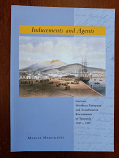
A history of German, Northern European and Scandinavian Recruitment to Tasmania 1855-1887.

A record of some of the early history of Hobart Town, drawn from the headstone inscriptions of St David's Burial Ground — Van Diemen's Land's first cemetery, in use from 1804 to 1872. A valuable resource for tracing early Hobart and colonial-era family history.


![John Bowen's Hobart – The Beginning of European Settlement in Tasmania | Phillip Tardif | 2003 [USED – SC – Out of Print]](https://onlinestore.bookcellar.com.au/images/T/john-bowens-hobart-r1eM4i.png "John Bowen's Hobart – The Beginning of European Settlement in Tasmania | Phillip Tardif | 2003 [USED – SC – Out of Print]")
Phillip Tardif's history of the earliest European settlement in Tasmania — focusing on Lieutenant John Bowen's 1803 establishment of the first European settlement at Risdon Cove on the Derwent River, and the subsequent founding of what became Hobart Town under Lieutenant Colonel David Collins in 1804.
- per page