Michael, an aspiring writer who has recently finished his PhD, takes a job as the secretary to his literary hero, Lucian Clarke, a reclusive novelist with a mysterious cosmopolitan past, who lives in a cottage in a village on a mountain outside Hobart which gives the book its title, Wood Green.
Two of Harry O'May's histories of Tasmanian maritime life bound together in one volume — Wooden Hookers of Hobart Town and Whalers out of Van Diemen's Land. O'May was one of the most diligent historians of Hobart's seafaring past — he documented the ships, the masters, the trades and the men of the Derwent and the southern seas in a series of books published from the 1940s to the 1960s.
Dodging ships and weathering gales, the small ships were the lifeblood of Tasmania's islands, bringing in the necessities of life and taking away island produce including livestock, dairy produce and mutton birds in season.
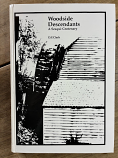
Published privately by the author in 1991 to mark 150 years of the Clark family's settlement at Woodside in the Huon Valley, this traces the family from the earliest land alienation and settlers in the valley, through successive generations of the Clark family and the families who married into it — among them John and Ann Kellaway of the neighbouring property Woodstock, and the Schenck, Ballantyne and Gulliver families.
Woven Landscape is an examination of what makes a place through its connections to flora, fauna, geology and known heritage, using the Tasmanian Midlands as an example.
King Island, in Bass Strait, has been the site of over 60 shipwrecks and more than 800 lives lost, including the Cataraqui (1845, Australia's worst civil maritime disaster, over 400 dead), the convict ship Neva (1835, 218 lost) and the British Admiral (79 lost).