- per page

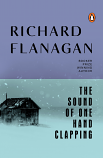
The Sound of One Hand Clapping
In the winter of 1954, in a construction camp in the remote Tasmanian highlands, when Sonja Buloh was three years old and her father was drinking too much, Sonja's mother walked into a blizzard never to return.
Our price: AUD 22.99
including GST
10.00
% (
AUD 2.09
)
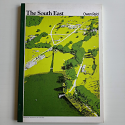
The South East
A Tasmanian history booklet compiled for adult education classes, and including Clarence, Richmond, Sorell, Tasman Peninsula, and shipping history.
Our price: AUD 36.00
including GST
10.00
% (
AUD 3.27
)
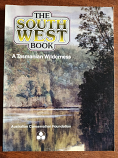
The South West Book
The classic reference book to the Tasmanian wilderness.
Our price: AUD 19.95
including GST
10.00
% (
AUD 1.81
)

The Sparkle Pages - used
'Is marriage just a series of texts about where the children are and whether we need milk until one of you dies?'
Our price: AUD 12.50
including GST
10.00
% (
AUD 1.14
)

The Spectre of Truganini
1980 Boyer lectures by Professor Bernard Smith.
Our price: AUD 9.50
including GST
10.00
% (
AUD 0.86
)

The Square Up
The 4th novel in the Tasmanian Detective Inspector Mahoney crime fiction series.
Our price: AUD 29.95
including GST
10.00
% (
AUD 2.72
)
![The Story of a Battalion – History of the 48th Battalion AIF in the Great War | W. Devine | First Edition 1919 [USED – HC – Good]](https://onlinestore.bookcellar.com.au/images/T/Story%20of%20a%20Battalion-GWkNmF.png "The Story of a Battalion – History of the 48th Battalion AIF in the Great War | W. Devine | First Edition 1919 [USED – HC – Good]")
The Story of a Battalion – History of the 48th Battalion AIF in the Great War | W. Devine | First Edition 1919 [USED – HC – Good]
The unit history of the 48th Battalion AIF in the First World War, written by W. Devine and published in 1919 — in the immediate aftermath of the war, making this a near-contemporary record rather than a later retrospective history. The 48th Battalion was raised in South Australia and Western Australia in 1916 as part of the 12th Brigade, 4th Division AIF, and served on the Western Front through major engagements including Pozières, Bullecourt, Dernancourt and the Hundred Days Offensive of 1918.
Our price: AUD 265.00
including GST
10.00
% (
AUD 24.09
)

The Story of Devonport
A small history of Devonport on the north coast of Tasmania, illustrated with black/white photos.
Our price: AUD 12.50
including GST
10.00
% (
AUD 1.14
)
![The Story of Holy Trinity Church, Cressy 1858-1958 - Centenary History by Karl von Stieglitz [Vintage Softcover Booklet]](https://onlinestore.bookcellar.com.au/images/T/story-holy-trinity-church-cressy-ajG2KT.png "The Story of Holy Trinity Church, Cressy 1858-1958 - Centenary History by Karl von Stieglitz [Vintage Softcover Booklet]")
The Story of Holy Trinity Church, Cressy 1858-1958 - Centenary History by Karl von Stieglitz [Vintage Softcover Booklet]
Karl von Stieglitz's 1958 centenary history of Holy Trinity Church, Cressy, consecrated in 1858 by Bishop Francis Russell Nixon in Tasmania's Norfolk Plains district.
Our price: AUD 32.00
including GST
10.00
% (
AUD 2.91
)
The Story of Kingborough
A small, short history of the area around Kingston, south of Hobart.
Our price: AUD 9.50
including GST
10.00
% (
AUD 0.86
)