- per page

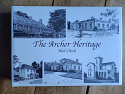
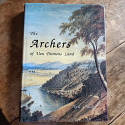
The landmark 1991 first edition of Neil Chick's definitive genealogical and pastoral history of northern Tasmania’s prominent Archer family. A substantial, large-format hardcover containing extensive family lineage charts, maps, and archival illustrations.
![The Art of Apple Branding | Cowles & Walker | Award-Winning Tasmanian Apple Label History | 2005 [USED – HCDJ]](https://onlinestore.bookcellar.com.au/images/T/art-of-apple-branding-hcdj-wkIGUL.png "The Art of Apple Branding | Cowles & Walker | Award-Winning Tasmanian Apple Label History | 2005 [USED – HCDJ]")
Christopher Cowles, former Studio Head of Graphic Design at the Tasmanian School of Art, and David Walker, a professional photographer and librarian at the Tasmanian Archives and Heritage Office, spent 15 years researching this study of the paper labels once pasted onto wooden apple crates for export, at a time when Tasmania was known internationally as "the Apple Isle."
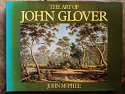
This definitive biographical and art history volume provides a rich, comprehensive analysis of the life and legacy of John Glover, one of Australia’s most celebrated colonial landscape painters. Written by renowned curator John McPhee, the text chronicles Glover's 1829 emigration from Britain to Van Diemen's Land, exploring how his artistic style adapted to the unique light and form of the northern Tasmanian environment.

Martin Flanagan spends a year with the irrepressible Jane Tewson, co-founder of Comic Relief, Red Nose Day and Igniting Change.
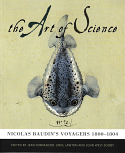
Join John Caire in exploring Australia's most popular recipes over the years, including some introduced from Europe and Asia.
A little book containing a collection of the most popular tried and true family recipes.