- per page

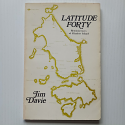
Jim Davie's reminiscences of life on Flinders Island — the largest of the Furneaux Group in Bass Strait, sitting on the 40th parallel south, within the "Roaring Forties" latitude band that gives this book its title.


Launceston General Hospital opened in 1863, replacing the earlier Cornwall Hospital and Infirmary, and grew under surgeon superintendents Sir John Ramsay and Dr Clifford Craig into one of Tasmania's leading provincial hospitals — among its milestones were one of the first successful internal heart massage treatments for cardiac arrest, and one of the first hospital X-ray machines in the state.


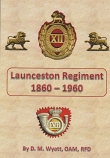
D.M. Wyatt OAM's history of the Launceston Regiment, from the initial formation of colonial volunteers in 1860 through a century of continuous lineage: colonial development to 1902, the Launceston Regiment and Infantry of 1903–1914, its contribution to the First World War, the interwar years, the 12th/50th Battalion of the Second World War (1939–1945), the formation of the 12th/40th Battalion in 1948, and on to the 12th Battalion (Launceston Regiment).

A history of the settlement and growth of Launceston in the north of Tasmania through maps.

Black and white drawings of key Launceston landmarks by Arthur Phillips, with explanatory text by Patsy Adam Smith, published in the Rigby Australian historical series.

John Reynolds's history of Launceston — the city at the head of the Tamar River in northern Tasmania, founded in 1806 and Tasmania's second city.