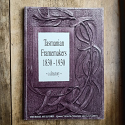
Tasmanian Framemakers 1830-1930, A Directory - Therese Mulford, QVMAG
Added: Sep 18, 2026
Therese Mulford's QVMAG-published directory of Tasmanian picture framemakers working between 1830 and 1930, including a chronological listing, convict-made frames, and framemakers linked to known Tasmanian artists.
Our price: AUD 65.00
including GST
10.00
% (
AUD 5.91
)
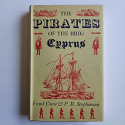
The Pirates of the Brig Cyprus: Convict Mutiny at Recherche Bay, Van Diemen's Land, 14 Aug 1829 - Clune & Stephensen HCDJ
Added: Sep 16, 2026
The true story of the 1829 convict mutiny aboard the brig Cyprus - seized at Recherche Bay while bound for Macquarie Harbour, and sailed across the Pacific under convict command. By Frank Clune and P.R. Stephensen.
Our price: AUD 55.00
including GST
10.00
% (
AUD 5.00
)
![Clyde Company Papers 1821-1873 - the primary source record of colonial Van Diemen's Land and the founding of Victoria's pastoral industry, 7 volumes | ed. P.L. Brown | Oxford, 1952-1977 [USED – HCDJ – Complete Set]](https://onlinestore.bookcellar.com.au/images/T/clyde-company-papers-set-F34MWx.png "Clyde Company Papers 1821-1873 - the primary source record of colonial Van Diemen's Land and the founding of Victoria's pastoral industry, 7 volumes | ed. P.L. Brown | Oxford, 1952-1977 [USED – HCDJ – Complete Set]")
Clyde Company Papers 1821-1873 - the primary source record of colonial Van Diemen's Land and the founding of Victoria's pastoral industry, 7 volumes | ed. P.L. Brown | Oxford, 1952-1977 [USED – HCDJ – Complete Set]
Added: Sep 15, 2026
Clyde Company Papers 1821 to 1873 in seven volumes - Volumes I to VII.
Our price: AUD 395.00
including GST
10.00
% (
AUD 35.91
)

![The World of Olegas Truchanas | Max Angus | 1975 | Fifth Edition [USED – HCDJ – Very Good]](https://onlinestore.bookcellar.com.au/images/T/world-of-olegas-fifthedition-YI0mD6.png "The World of Olegas Truchanas | Max Angus | 1975 | Fifth Edition [USED – HCDJ – Very Good]")
![Theodore Thomson Flynn – Not Just Errol's Father | Tony & Vicki Harrison | 2013 [USED – SC – Out of Print]](https://onlinestore.bookcellar.com.au/images/T/theodore-thomson-flynn-not-just-errols-father-buGuE7.png "Theodore Thomson Flynn – Not Just Errol's Father | Tony & Vicki Harrison | 2013 [USED – SC – Out of Print]")


![Thomas Bock's Portraits of the Tasmanian Aborigines - N.J.B. Plomley's scholarly study, QVMAG New Series No. 18 | 1965 [USED – SC – Booklet]](https://onlinestore.bookcellar.com.au/images/T/thomas-bocks-portraits-tas-aborigines-fFvDGA.png "Thomas Bock's Portraits of the Tasmanian Aborigines - N.J.B. Plomley's scholarly study, QVMAG New Series No. 18 | 1965 [USED – SC – Booklet]")