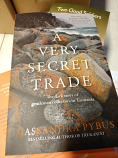
British sealer John Scott arrived in Bass Strait in 1806 and had children with at least three Tasmanian Aboriginal women, fathering at least nine children before drowning off King Island in 1843. Scottish-born David Howie, appointed Constable of the Straits, patrolled Bass Strait and King Island; in 1845 he played a key role in the aftermath of the Cataraqui disaster. This book traces the lives and Tasmanian Aboriginal descendants of both men, drawing together family trees, John Scott's own diary, and the wider Bass Strait sealing community of the 19th century.
The Cruise of the Freak and the missionary voyages in Bass Strait of Canon Marcus Brownrigg 1872-1885, telling of the lives of Tasmanian Aboriginal people on the Bass Strait islands.
This vintage TMAG booklet serves as an important mid-twentieth-century pictorial and historiographical record of the Aboriginal people of Tasmania. It compiles historical commentary alongside archival photographic plates, sketches, and portraits from the museum's early collections.
Julia Clark's illustrated introduction to the history and culture of Tasmania's Aboriginal people — covering the earliest inhabitants of the island, their material culture, social life, and the catastrophic impact of European colonisation. At 56 pages with colour and black and white illustrations throughout, this is a concise and accessible overview suitable for older children, students and adults wanting a clear introductory account.
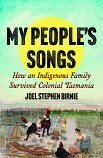
Joel Stephen Birnie grew up hearing the true stories about Tarenootairer, his earliest known ancestral grandmother (c.1806–58), taken from her family as a child by Bass Strait sealers, and tells his family's Tasmanian aboriginal history without the colonial lens.