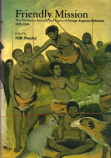
A history of the Flinders Island Aboriginal Settlement with the Flinders Island Journal of George Augustus Robinson 1835-1839.
The first edition of N.J.B. Plomley's landmark work — the edited journals and papers of George Augustus Robinson covering his time among the Aboriginal peoples of Van Diemen's Land from 1829 to 1834. Robinson was the colonial government's self-appointed "Conciliator" to the Aboriginal population during the Black War period, and his journals are among the most detailed primary source records of that era.
Keith Windschuttle's controversial challenge to the accepted historiography of Tasmania's frontier period. Published in 2003, this first volume of The Fabrication of Aboriginal History focuses on Van Diemen's Land from 1803 to 1847 — covering the period of the Black War and the removal of the surviving Aboriginal population to Flinders Island.
A reconstruction of Jorgen Jorgenson's 'lost' book on Tasmanian aboriginal customs and habits, and on his role in Van Diemen's Land roving parties and the Black Line.
British sealer John Scott arrived in Bass Strait in 1806 and had children with at least three Tasmanian Aboriginal women, fathering at least nine children before drowning off King Island in 1843. Scottish-born David Howie, appointed Constable of the Straits, patrolled Bass Strait and King Island; in 1845 he played a key role in the aftermath of the Cataraqui disaster. This book traces the lives and Tasmanian Aboriginal descendants of both men, drawing together family trees, John Scott's own diary, and the wider Bass Strait sealing community of the 19th century.