
- per page

Little more than 70 years after the British settled Van Diemen's Land (later Tasmania) in 1803, the indigenous community had been virtually wiped out.

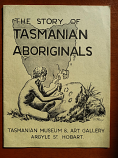
This vintage TMAG booklet serves as an important mid-twentieth-century pictorial and historiographical record of the Aboriginal people of Tasmania. It compiles historical commentary alongside archival photographic plates, sketches, and portraits from the museum's early collections.
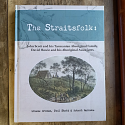
British sealer John Scott arrived in Bass Strait in 1806 and had children with at least three Tasmanian Aboriginal women, fathering at least nine children before drowning off King Island in 1843. Scottish-born David Howie, appointed Constable of the Straits, patrolled Bass Strait and King Island; in 1845 he played a key role in the aftermath of the Cataraqui disaster. This book traces the lives and Tasmanian Aboriginal descendants of both men, drawing together family trees, John Scott's own diary, and the wider Bass Strait sealing community of the 19th century.
![The Tasmanians – The Story of a Doomed Race | Robert Travers | 1968 [USED – HCDJ – Good]](https://onlinestore.bookcellar.com.au/images/T/tasmanians-story-doomed-race-3iy0OB.png "The Tasmanians – The Story of a Doomed Race | Robert Travers | 1968 [USED – HCDJ – Good]")
Robert Travers's 1968 account of the fate of the Aboriginal people of Tasmania — from first European contact through the Black War and the removal of the surviving population to Flinders Island, to the death of Truganini in 1876. Published in 1968, this is a vintage history of its era — it reflects the understanding and approach to Aboriginal Tasmanian history that was current at that time, before the more critical and rigorous scholarship of recent decades.
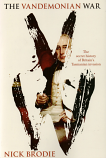
The Vandemonian War tells the secret history of Britain's Tasmanian invasion to create the Van Diemen's Land settlement.
- per page